
TL;DR

Get decor and gifts delivered free — and shop member deals
- Fast, free delivery on millions of items
- Access to Prime Big Deal Days deals on October 6–7
- Prime Video, Amazon Music and more included
A Family Handyman report featuring chimney professional Tracy Zarriello outlines steps homeowners can take to use fireplaces more safely this winter. The advice includes annual professional inspections, burning dry seasoned wood, checking the damper and using a fireplace screen; cleaning logs are not a replacement for chimney cleaning.
A Family Handyman report featuring chimney professional Tracy Zarriello advises homeowners to have wood-burning chimneys inspected at least once a year and to burn only dry, seasoned wood to reduce fire risks this winter. The guidance also covers damper use, fireplace screens and warning signs of chimney wear, while stressing that cleaning logs do not replace a professional inspection or cleaning.
The maintenance a fireplace needs depends on its type. Wood-burning fireplaces create ash and require regular chimney care, while gas fireplaces need inspections to check the burner and venting system. Electric fireplaces produce no combustion byproducts and commonly function as space heaters, though their flames are simulated.
Zarriello says an open masonry fireplace may draw heated air out of the house rather than heat it efficiently. For homeowners whose priority is heating, she says a gas insert or EPA-certified wood stove is usually more effective. The report does not compare specific models or provide efficiency figures.
In wood-burning chimneys, smoke can leave behind creosote, a flammable residue that can build up from light soot into hard, shiny deposits. Zarriello says hardened creosote is difficult to remove and may ignite. A chimney fire can damage the flue liner or other parts of the home, and damage may create a route for carbon monoxide to enter living areas.
How Safe Burning Protects Homes
The advice matters because hazards can develop inside a chimney where homeowners cannot easily see them. Creosote buildup, damaged masonry and ventilation problems may not be evident from a view of the fireplace opening. A professional inspection can identify issues in the flue and other parts of the system before continued use adds to the risk.
Heating choices also affect household comfort and fuel use. Zarriello cautions that an open wood-burning fireplace can pull warmed indoor air outside. That means a fireplace that feels warm nearby may not be an effective way to heat the whole home. Homeowners should distinguish ambient enjoyment from the unit’s capacity to heat a space, and follow the manufacturer’s instructions for their specific appliance.
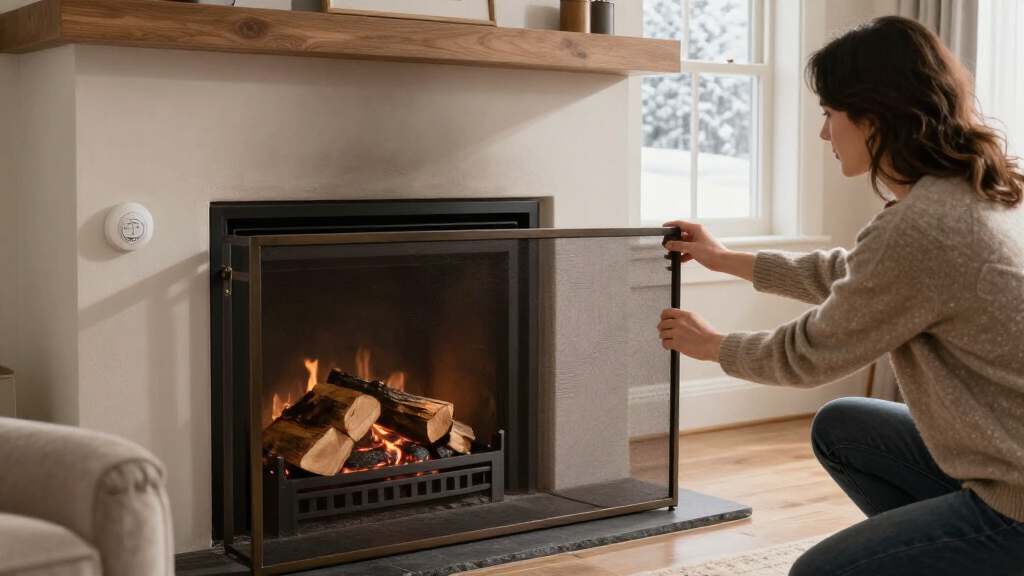
Basic precautions reduce preventable problems: keep a screen in place to catch sparks, open the damper before lighting a fire and leave it open while the fire burns. Ash should be removed only after it has completely cooled. These steps support safer use, but they do not replace an annual professional check.
As an affiliate, we earn on qualifying purchases.
Different Fireplaces, Different Upkeep
The source report presents Zarriello’s experience as the owner of Queen Sweep Chimney, Plumbing, Air Conditioning & Heating Services. It focuses on household fireplace care rather than reporting a particular fire, new regulation or change in official safety guidance. Its recommendations are practical maintenance advice attributed to a chimney professional.
Wood moisture and airflow are central to the report’s guidance. Zarriello recommends seasoned hardwoods such as ash, maple and oak, dried for six to 12 months or longer, with moisture content below 20 percent. Wet or green wood produces more smoke and can contribute to creosote formation. The report also recommends checking the firebox monthly during the burning season for cracked bricks or deteriorating mortar, testing the damper and looking from the ground to see whether the chimney cap is present and intact.
Gas units do not produce the same wood ash and creosote concerns as wood-burning fireplaces, but Zarriello still recommends regular inspection of their burners and vents. Electric models have no combustion byproducts; homeowners should use them according to product instructions and avoid treating all fireplace types as if they have identical maintenance needs.
“Airflow is everything.”
— Tracy Zarriello, owner of Queen Sweep Chimney, Plumbing, Air Conditioning & Heating Services, as quoted by Family Handyman
As an affiliate, we earn on qualifying purchases.
What Homeowners Cannot See
The report does not provide inspection findings for any particular home, so the condition of an individual chimney cannot be determined from the general advice. Hidden flue damage and creosote levels require assessment by a qualified professional with suitable equipment; a ground-level look at the chimney cap is not a substitute.
The source does not specify local code or permit requirements, give a cost estimate for inspections, or set out a single maintenance schedule for every appliance. Needs can vary by fireplace type, use and condition. It also does not provide a detailed emergency response plan for a suspected chimney fire; homeowners should follow local fire-safety guidance and contact emergency services if there is an active fire or immediate danger.
As an affiliate, we earn on qualifying purchases.
Before the Next Fire
Before regular winter use, homeowners can arrange a professional chimney inspection, confirm the damper opens and closes, and check the firebox for visible damage. For wood fires, use dry, seasoned fuel, keep a screen in place and do not remove ash until it is fully cool. If the chimney cap appears missing or broken, or the fireplace has not been checked recently, ask a qualified professional to assess it before continued use.
During the season, follow the appliance maker’s operating instructions and keep up with the report’s suggested monthly visual checks for wood-burning fireplaces. Zarriello says cleaning logs may loosen some light deposits but cannot remove all creosote, particularly hardened buildup. Inspection and appropriate cleaning remain the next step when maintenance is due; the source does not identify a specific date or further announcement to watch for.
As an affiliate, we earn on qualifying purchases.
Key Questions
How often should a chimney be inspected?
Zarriello recommends a professional inspection at least once a year. A professional can examine parts of the flue and ventilation system that homeowners generally cannot see during a visual check.
What kind of wood should I burn?
The report recommends seasoned hardwood, including ash, maple and oak. Zarriello says wood should generally dry for six to 12 months or longer and have moisture content below 20 percent; wet or green wood produces more smoke and creosote.
Can chimney-cleaning logs replace a professional cleaning?
No. Zarriello says some products may loosen light deposits, but they do not remove all creosote, particularly hardened buildup. A cleaning log is not a substitute for inspection and cleaning with proper equipment.
Does an open wood-burning fireplace heat a home efficiently?
Not necessarily. Zarriello says a traditional open fireplace can pull heated indoor air out of the house. She says a gas insert or EPA-certified wood stove is usually more effective when the goal is heating, though the report does not provide model-specific efficiency comparisons.
What should I check during the burning season?
The report suggests checking a wood-burning fireplace monthly for cracked bricks and deteriorating mortar, testing the damper, and looking from the ground to see whether the chimney cap is intact. Keep a screen in place and remove ash only once it has completely cooled.
Source: rss
Halloween Picks
halloween
As an affiliate, we earn on qualifying purchases.