
TL;DR

Get decor and gifts delivered free with Prime
- Fast, free delivery on millions of items
- Prime Video, Amazon Music and more included
- Member-only deals all year
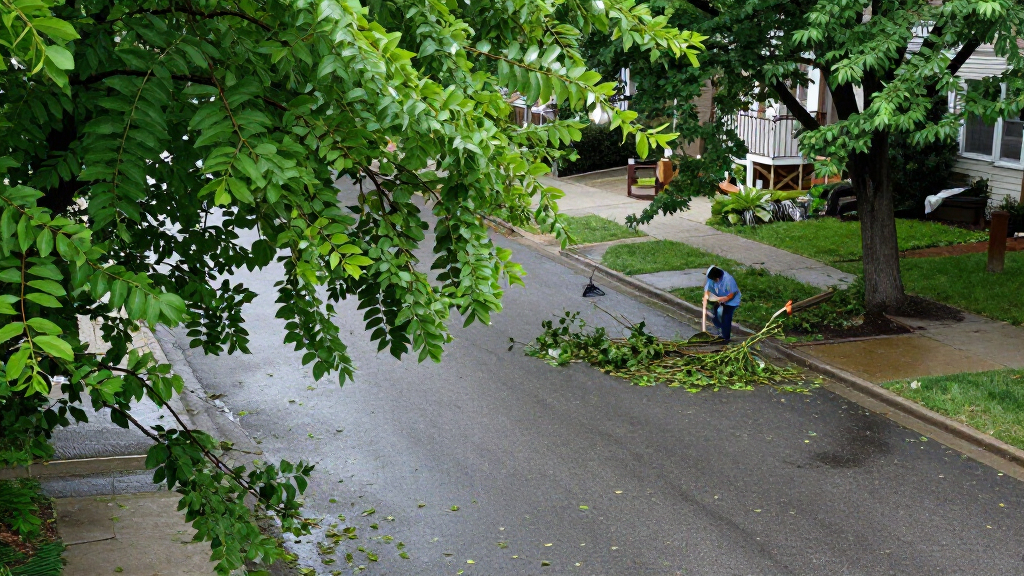
Fall storms can put extra stress on trees that still have full canopies: leaves and branches catch wind, and saturated soil may give roots less support. Research and guidance cited by Family Handyman point to greater risks of broken branches or uprooting, but the outcome depends on each tree’s condition and the storm.
Fall windstorms can pose added risks to trees when deciduous trees still carry their leaves and heavy rain has saturated the ground, according to a report by Family Handyman. Leaves and branches give wind more surface to push against, while wet soil may hold roots less securely, raising the potential for broken limbs, leaning trees or uprooting.
Arborists sometimes describe a dense canopy’s effect as a “windsail”: foliage and branches present more area for gusts to press on, increasing the load placed on a tree. A video from the arborist education account @fruitstitute, cited by Family Handyman, compares a thick canopy to a sail catching wind. The report also points to research on red maples published in a journal of the International Society of Arboriculture, which found that crown structure affects the wind load a tree experiences.
Trees can respond to gusts as leaves turn or cluster and branches bend and move. Those natural movements do not remove the risk, and they do not mean homeowners should heavily prune trees before a storm. Pruning needs vary by species and tree condition; the report advises leaving major pruning decisions to a qualified arborist. An eight-year study of street trees in Rochester, New York, cited in the report found that most recorded branch failures occurred while the trees were in leaf.
Rain can add a separate source of stress. The U.S. Forest Service says saturated soil and shallow roots can make trees more vulnerable to windthrow, or being blown over. Penn State Extension says trees may begin leaning or uproot if wet ground cannot hold their root systems securely. Raised or lifted soil around roots can indicate movement, though the report does not say that any single sign predicts whether a tree will fall.
Leaf Cover and Root Stability
The risk comes from the combination of wind load above ground and weaker support below it. A leafy canopy can catch gusts while soaked soil may provide less resistance to the force acting on the trunk and roots. This helps explain why a fall storm can damage trees even when the same tree might face different conditions later, after its leaves have dropped or the ground has dried.
For residents, the practical concern is not only tree loss. Falling branches and uprooted trees can threaten people, homes, vehicles and nearby property. The report does not establish that every leafy tree in wet ground is dangerous; tree health, root condition, prior damage, species and the strength of the storm all affect the outcome. It does, however, identify conditions that warrant attention before and after severe weather.
tree pruning tools for fall storm safety
As an affiliate, we earn on qualifying purchases.
As an affiliate, we earn on qualifying purchases.
Why Fall Storms Can Hit Hard
Deciduous trees shed their leaves seasonally, but the timing varies. A storm arriving before leaves have fallen can meet a full canopy, rather than the reduced surface area of a bare tree. If heavy or prolonged rain has come first, the storm may also find the soil saturated. Family Handyman describes this overlap as a challenging combination for trees, not as a guarantee of damage.
The report draws on several kinds of evidence: an arborist education video, studies published through the International Society of Arboriculture, and guidance from the U.S. Forest Service and Penn State Extension. The cited Rochester study covers eight years of street-tree observations and reports that most branch failures occurred while trees were in leaf. That finding concerns the trees and setting studied; it does not by itself quantify the risk for every region, species or storm.
“A dense canopy can have a “windsail effect.””
— Family Handyman, summarizing arborist usage
As an affiliate, we earn on qualifying purchases.
Risk Varies From Tree to Tree
The cited material does not provide a single probability of failure for trees in leaf during a windstorm, nor does it specify a wind speed or rainfall amount at which a particular tree becomes unsafe. Species, crown shape, decay, root damage, weak limbs and earlier storm damage can all affect how a tree responds. The Rochester study’s finding applies to the street trees and observation period examined; the report gives no basis for turning it into a universal risk estimate.
It is also not possible from the report alone to determine whether a specific leaning tree will fall. Fresh leaning, lifted soil, cracked limbs or hanging branches are warning signs to take seriously, but a professional assessment may be needed to establish the danger and appropriate response.
As an affiliate, we earn on qualifying purchases.
After the Wind, Check From Safety
After a storm, keep away from trees showing new leaning, raised soil, cracked limbs or hanging branches. Do not stand beneath damaged limbs or try to handle a tree that could reach people or property. Penn State Extension recommends seeking a professional assessment when a damaged tree presents that kind of threat. A qualified arborist can evaluate the tree and advise whether pruning or other work is appropriate.
Before the next storm, homeowners can watch for visible signs of decline or earlier damage and arrange an arborist’s assessment when concerns arise. The report does not recommend heavy, last-minute pruning as a general precaution. Tree-specific advice is the next useful step where there are concerns; the level of risk will depend on the tree, ground conditions and weather as events develop.
As an affiliate, we earn on qualifying purchases.
Key Questions
Why can leaves make a tree more vulnerable to wind?
Leaves and branches increase the canopy surface exposed to gusts, which can place added wind load on the tree. The effect depends on the tree’s crown and condition.
How does wet soil affect trees in a windstorm?
Saturated soil may hold roots less securely, especially where roots are shallow. That can make leaning or uprooting more likely, according to guidance from the U.S. Forest Service and Penn State Extension cited in the report.
Should I prune a tree heavily before a storm?
The report does not recommend heavy pruning as a general storm precaution. Pruning needs differ by species and condition, so consult a qualified arborist about major work.
What signs of storm damage should I watch for?
Stay clear of trees with new leaning, lifted soil around the roots, cracked limbs or hanging branches. If a damaged tree could threaten people or property, seek a professional assessment.
Source: rss
Halloween Picks
halloween
As an affiliate, we earn on qualifying purchases.