
TL;DR

Get decor and gifts delivered free with Prime
- Fast, free delivery on millions of items
- Prime Video, Amazon Music and more included
- Member-only deals all year
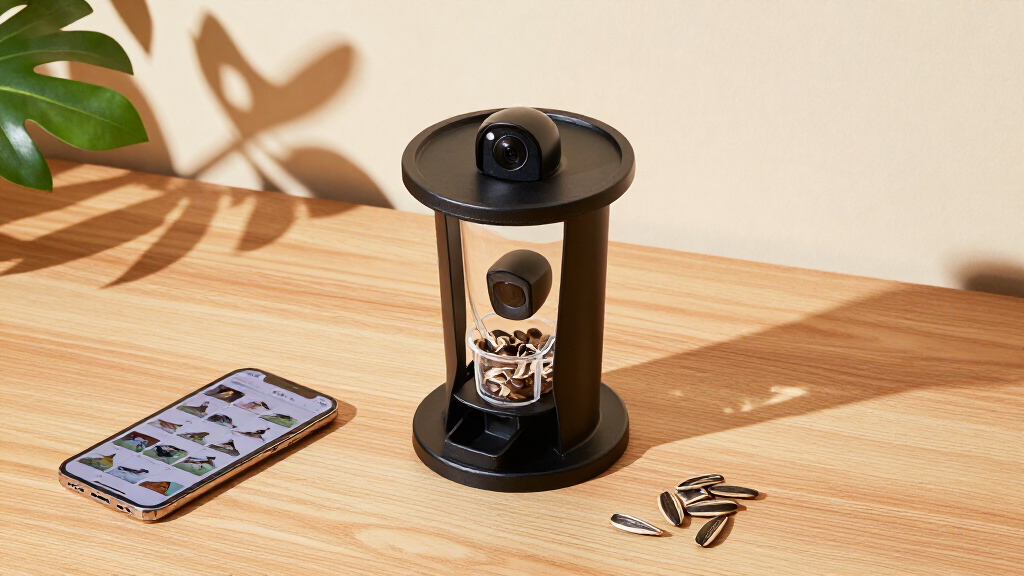
The Verge’s Thomas Ricker reported that a Kiwibit Bird Feeder 2 Pro initially attracted small birds and provided AI species alerts and 4K video, but later drew pigeons and mice. After a nuisance alarm failed to deter a pigeon, Ricker removed the feeder and advised buyers to try a simple, less expensive model before investing in smart features.
The Verge’s Thomas Ricker says he removed a $269 Kiwibit Bird Feeder 2 Pro after it began attracting pigeons that lingered at the seed tray and mice that fed on spilled seeds. The account describes a smart feeder that initially delivered AI bird alerts and 4K video, but whose deterrent alarm did not stop a pigeon from eating.
Ricker mounted the feeder in his garden and, within a few weeks, began receiving app notifications identifying visitors as species including Great Tits and Eurasian Blue Tits. He said dozens of small birds came to eat the feeder’s shelled sunflower seeds. The camera recorded them in 4K HDR video, while the app offered information about their food, nesting and migration habits.
The experience changed when a Common Wood Pigeon arrived and blocked much of the camera’s view. Ricker activated the feeder’s Nuisance Animal Alarm, which he said is generally intended for animals such as squirrels. The pigeon reacted to the sound but was not deterred, according to his account, and continued eating until he went outside and shooed it away.
Ricker said pigeons then returned, sometimes remaining at the feeder for 30 minutes or more. Mice also appeared below to eat seeds that had fallen. He eventually took the feeder down and stored it in a closet. He wrote that he did not blame Kiwibit for the animals’ behavior, while recommending that prospective buyers begin with a simple, inexpensive feeder rather than immediately paying for an AI model.
Smart Features Do Not Control Wildlife
The review highlights a practical limit of connected bird feeders: species recognition and video do not determine which animals visit. A feeder can make it easier to watch and identify birds, but its alerts and deterrent features may not prevent larger visitors from monopolizing the food or attracting other animals to spilled seed.
For buyers, that can change the value calculation. Ricker describes an enjoyable camera and app experience, but also a costly device he stopped using when the feeding setup no longer suited his garden. His recommendation is a personal one based on this test, not evidence that all smart feeders attract pests or that the Kiwibit alarm will fail in every setting.
As an affiliate, we earn on qualifying purchases.
From Small Birds to Pigeons
Ricker’s account began with the feeder drawing small birds that took individual seeds and carried them to nearby trees. The app’s automated alerts identified the visitors, and its recordings let him watch them in detail. He described the first days as a success and said he explored the app’s information about the birds.
The later problem was not an announced change to the product or a wider company issue. It was a first-person account of one garden: pigeons began spending longer periods at the feeder, and mice took advantage of seed on the ground. The source does not report a controlled test, comparisons with other feeders, or a response from Kiwibit.
“Looks like Great Tit!”
— Kiwibit app alert, as quoted by Thomas Ricker
As an affiliate, we earn on qualifying purchases.
One Garden, One Feeder Test
The source describes one reviewer’s experience; it does not establish how often Kiwibit feeders attract pigeons or mice, or whether the same outcome is typical in other gardens. Ricker also said it was unclear whether the same pigeon or multiple pigeons were returning.
The account does not give a measured test of the alarm’s volume or effectiveness, nor does it compare the feeder with other models. It also does not say whether Kiwibit commented on the report. The article’s title uses a humorous framing, but the reported events are specific to this test and should not be read as a general product-performance finding.
automatic bird feeder with species recognition
As an affiliate, we earn on qualifying purchases.
As an affiliate, we earn on qualifying purchases.
Try a Basic Feeder First
Ricker’s practical next step for prospective buyers is to start with a basic, lower-cost feeder and see what animals visit before spending more on a camera and AI features. He noted that a used feeder may not be returnable simply because it attracts unwanted visitors.
The source does not report a planned follow-up test, a product change or a response from Kiwibit. For now, the review leaves readers with an individual account and a buying recommendation, not a broader verdict on smart bird feeders.
As an affiliate, we earn on qualifying purchases.
Key Questions
What happened to the Kiwibit feeder?
Thomas Ricker said he took it down after pigeons repeatedly ate from it and mice fed on spilled seeds. He stored the feeder in a closet.
Did the feeder identify birds?
In Ricker’s test, the app sent AI alerts identifying visitors including Great Tits, Eurasian Blue Tits and a Common Wood Pigeon. The source does not independently evaluate the identification accuracy.
Did the nuisance alarm stop the pigeon?
Not in the reported incident. Ricker said the pigeon reacted to the alarm but continued eating until he went outside and shooed it away.
Does this show that smart feeders generally attract pests?
No. The article reports one reviewer’s experience in one garden. It does not establish how common the outcome is or compare the Kiwibit with other feeders.
What did the reviewer recommend to potential buyers?
Ricker advised starting with a simple, inexpensive feeder without AI before buying a more costly smart model.
Source: rss
Fall Picks
fall essentials
As an affiliate, we earn on qualifying purchases.