TL;DR

Get decor and gifts delivered free with Prime
- Fast, free delivery on millions of items
- Prime Video, Amazon Music and more included
- Member-only deals all year
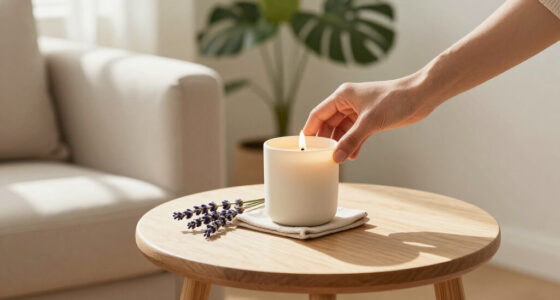
Scented candles for home decor combine fragrance, warm light, and a decorative object in one. Choose a scent and vessel that suit the room, remember that airflow and room size affect how the fragrance travels, and follow the maker’s care and safety directions every time you burn it.
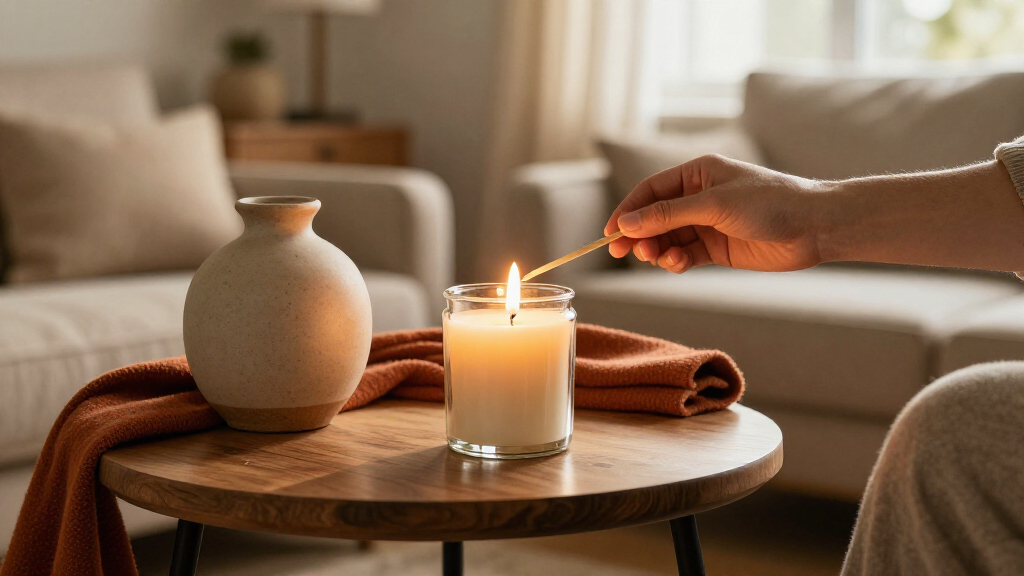
A candle can change the feel of a room before you light it. A sculptural cream vessel on a dark wood shelf adds shape and contrast; once lit, its soft glow and fragrance bring another layer. Scented candles combine useful light, fragrance, and a decorative object in one, which makes them an easy way to refresh a room without moving the furniture.
Choosing well takes more than picking the prettiest jar. You’ll want to think about room size, airflow, scent preference, and candle care, since a fragrance that feels gentle in a bedroom may disappear in an open living area. This guide walks you through the details, with practical examples for matching a candle to your space and using it safely.
You’ll also find a straightforward way to compare wax types and a few ideas for newer options, such as refillable vessels. The aim is simple: choose a candle you enjoy looking at, enjoy smelling, and can use with care.
Match a candle’s scent intensity to the room’s size and airflow, then check how it smells while burning.
Choose fragrance notes by personal preference; room-by-room examples are starting points, not rules.
Compare wax by formulation, sourcing details, price, and burn behavior instead of trusting “clean” or “natural” labels alone.
Use a stable, heat-resistant surface and keep lit candles away from drafts, flammable materials, children, and pets.
Follow each maker’s care instructions, and choose unscented or flameless options if fragrance bothers someone at home.
Choose a candle that fits your room, not just your shelf
Scented candles for home decor work best when their fragrance and size suit the room where you’ll use them. A small candle with a subtle scent may feel just right on a bedside table, while it can fade into the background in a large, open living room. Room size matters because more air can dilute the fragrance, while airflow can carry it away or make it uneven. The candle’s formula and wick also affect how fragrance is released, so a larger candle or a stronger scent description is only a starting point, not a guarantee.
Think about the difference between an enclosed reading nook and a kitchen with an extractor fan running. In the nook, fragrance may build up quickly; in the kitchen, moving air can disperse it. A stronger candle might be more noticeable there, but adding several at once can make aromas compete and leave the room feeling crowded. Start with one and let it burn only for the interval recommended by the maker. Notice whether the scent reaches the areas where you spend time and whether it remains comfortable. That gives you a better basis for choosing than simply counting candles or relying on a label.
Unlit and burning candles can smell different because heat changes how fragrance is released. When you choose online, descriptions of fragrance notes and intensity can help, and customer reviews may offer clues, but they reflect individual tastes and rooms. If you can shop in person, smell the candle before buying and ask whether the maker describes it as suited to a small or larger space. Treat those descriptions as guidance: your own room’s size, ventilation, and furnishings affect what you notice.
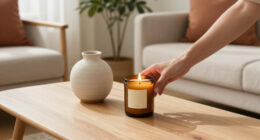
A useful starting point is to match the vessel to the room’s style. A matte stone-colored jar might sit quietly beside folded linen, while an amber glass vessel can pick up the warm tones of a wood shelf. Consider how the candle looks when unlit as well as how often you expect to burn it; a vessel that fits the room can remain part of the decor even when you choose not to add fragrance.
- Small bedroom: Try a subtle floral, herbal, or woody fragrance, since a compact room can make a strong scent feel more intense.
- Large living area: Look for a candle described as more noticeable, then judge its reach in your own space; an open plan may need a different choice from a closed room.
- Kitchen: A light citrus or herbal scent may suit the room, depending on your preference, though an extractor fan can affect how far it carries.
Products Worth Considering

Philips Hue Smart LED Candle Bulbs, B39, E12, 2-Pack

Ring Alarm 8-Piece Kit (2nd Gen) Home Security System

LG 85-Inch QNED73B Mini LED 4K Smart TV (2026)
As an affiliate, we earn on qualifying purchases.
Match scent notes to the mood you want at home
Choose fragrance notes by the feeling you like, not by a promise that a scent will change your mood in a set way. Floral, citrus, herbal, woody, and gourmand scents can create different impressions, but preferences are personal: the same rose fragrance may smell fresh to one person and powdery to another. Notes are useful shorthand for comparing descriptions, yet they cannot capture how a particular formula develops when warmed. Descriptions help you imagine the candle, but your nose gets the final say.
For a quiet evening, you might prefer a soft woody or herbal scent with a warm amber vessel. In a bright kitchen, a crisp citrus fragrance can feel at home beside a bowl of lemons. For a guest room, a light floral may be more welcoming than a powerful sweet fragrance that lingers on bedding. These pairings are about the impression you want and how noticeable the scent may be in that room; they are not fixed rules. If guests will use the space, a restrained option gives them more room to make it their own.
Consider how several scents work together, too. If your living room already carries the smell of fresh flowers, a strong floral candle may compete; a woody or unscented option can give the room a calmer balance. In a small apartment, using one candle at a time can help keep the air from feeling saturated. This also makes it easier to tell which fragrance you enjoy and whether it travels farther than expected.
Do you need one perfect scent for the whole home? Usually, a small rotation is more flexible. For example, keep a gentle herbal candle for the bedroom and a brighter citrus one for the kitchen, then use either only when you want the added fragrance. A rotation lets you respond to how a room is being used instead of keeping fragrance present everywhere all the time. This lets you establish a mood that suits the moment without turning every room into a different perfume counter.
Choose a fragrance you enjoy after it has been burning, not only one that smells appealing with the lid off.
Compare wax types by the trade-offs that matter to you
No single candle wax is automatically the best choice for every home. Paraffin, soy, coconut, beeswax, and blends differ in cost, availability, sourcing, and burn behavior, and the finished candle also depends on the wick and formulation. Those differences matter because a wax name alone does not tell you how strong the fragrance will seem, how evenly the candle will burn, or how long it will last. Instead of trusting a label such as “natural” or “clean” by itself, read the product and care information and decide which qualities matter most to you.
For example, if you want an affordable candle that’s easy to find, a paraffin option may suit your budget. Someone who prefers to compare sourcing information might look at a soy, coconut, or beeswax candle and check what the maker says about ingredients. Blends are common, too; a label that names more than one wax isn’t necessarily a sign of poor quality. The tradeoff is that a blend may make it harder to compare products by a single wax category, so look for the full ingredient or wax information when it is available.
Compare practical details as well as marketing claims. A candle’s listed burn time is an estimate, not a guarantee; its size, wick, room conditions, and use can all affect how long it lasts. If two candles claim the same burn time, check the container size and maker’s instructions before treating them as equivalent. A lower price per candle may be less useful if the size or care requirements differ, while a higher price does not by itself establish better performance.
| Wax type | What to check | Good question to ask |
|---|---|---|
| Paraffin | Price, formulation, and care instructions | Does its fragrance and price suit this room? |
| Soy | Whether it’s a blend and how the maker describes its performance | Can I find clear ingredient information? |
| Coconut or blends | Full wax blend, availability, and price | What waxes are actually in the candle? |
| Beeswax | Sourcing details and whether it is scented | Does the scent suit my preference? |
This comparison won’t tell you how a particular candle will burn; the wick, vessel, and formula matter too. It will help you compare products more carefully than a single badge on the label can. If the information you care about is missing, that uncertainty is part of the comparison and may be a reason to choose a product with clearer details.
Style the vessel and place the candle where it belongs
A candle’s container can tie together a shelf, mantel, or coffee table through its color, shape, and texture. A short, wide vessel can feel grounded on a tray beside a book, while a tall glass jar may add a clean vertical line to a bathroom shelf. The right vessel can make a candle look considered even when it’s unlit. Think about scale as well as color: a small jar may disappear among large objects, while an oversized one can dominate a narrow shelf.
Try a simple arrangement: place a candle on a stable, heat-resistant surface, then group it with one or two objects that share its colors or materials. A cream jar beside a pale ceramic dish and folded linen creates a softer look than a cluster of mismatched containers. Leave clear space around the candle so the display doesn’t crowd the flame. That space also makes it easier to see and reach the candle safely, and to remove nearby objects if the arrangement feels too close once lit.
Placement must work for safety as well as appearance. Keep a burning candle away from drafts, curtains, paper, children, and pets; a flickering flame near a curtain is a warning sign, not a decorative effect. Don’t set it beneath a shelf or close to an open window, fan, or air vent, where moving air can disturb the flame and affect how it burns. A spot that looks attractive but sits in a draft can lead to uneven burning, so choose the surface and surroundings before lighting it.
Refillable and reusable jars are popular because one vessel can suit the room longer than a single candle. Check the maker’s instructions before refilling or repurposing a jar, and don’t reuse a vessel that is cracked or otherwise damaged. A vessel designed for one candle may not be suitable for another refill or for a new purpose, so its condition and maker’s guidance matter. If a candle becomes a planter or storage jar later, clean it safely only after the flame is out and the container has cooled.
Follow a simple routine for an even, safer burn
To get a more even burn and reduce preventable hazards, follow the candle maker’s directions from the first lighting through the final use. Wick length, candle diameter, burn interval, and vessel design differ, so there isn’t one timing rule that fits every candle. A candle that tunnels—burning down the middle and leaving wax on the sides—may be affected by its wick, burn time, room draft, or design. Since several factors can produce the same result, changing how you use it based on generic advice may not help; start with the specific care instructions for that candle.
- Read the label. Check the maker’s instructions for wick care and the recommended burn interval. These directions account for the product’s design better than a single rule meant for every candle.
- Set it down safely. Use a stable, heat-resistant surface away from drafts, flammable items, children, and pets. A steady location helps keep the flame and hot vessel away from things that could be knocked or catch fire.
- Stay in the room. Never leave a burning candle unattended; extinguish it before leaving or going to sleep. Being present lets you respond if the flame becomes unstable or the candle is disturbed.
- Watch the flame and vessel. Don’t move a lit candle, and stop using it if its container is damaged or the maker’s instructions say it has reached the end of its usable life. Heat and liquid wax make a lit candle harder to handle safely.
- Ventilate as needed. If fragrance bothers anyone in your home, extinguish the candle, let the room air out, and consider an unscented or flameless alternative. The goal is a comfortable room, not keeping a scent going at any cost.
Imagine lighting a candle beside a breezy window during dinner. The flame flickers and the wax melts unevenly; closing the window or moving the candle while it’s extinguished may solve the placement issue, but never carry it while lit. Follow the manufacturer’s guidance on wick trimming, since the recommended method and length can vary. If uneven burning continues, check the candle’s own care directions rather than extending the burn beyond the stated interval.
Keep fragrance and flame out of reach, and never leave a burning candle unattended.
Choose a candle that suits sensitive households, too
Some people find fragrance irritating, including people with asthma or fragrance sensitivities, and scented candles can bother them even when others in the room enjoy the smell. The full formulation and the person’s sensitivity both matter; a label that says “natural” or “clean” does not guarantee no indoor emissions or irritation. A fragrance that seems mild to one person may still be uncomfortable for another, so shared spaces call for attention to how everyone responds. If anyone in your home reacts to fragrance, use fewer scented products and pay attention to how they feel in the space.
For instance, if a guest starts coughing or develops a headache after you light a candle, extinguish it and ventilate the room. You might choose an unscented candle for warm light or a flameless option when fragrance is unwelcome. Ask guests about scent preferences before lighting a candle during a meal or gathering. This small check helps avoid making a decorative choice that leaves someone uncomfortable or unable to enjoy the room.
Keep candles and hot wax well away from pets and children, and don’t assume a high shelf makes an open flame safe around a curious pet. For health concerns specific to a person, speak with a clinician; for concerns about a pet, ask a veterinarian. Those conversations can help you decide whether a scented candle belongs in your home.
You can still decorate with candles without filling every room with fragrance. An unlit candle can add color and texture, and a flameless candle can provide a glow where an open flame isn’t a good fit. The best choice is the one that feels comfortable for everyone sharing the space. In a household with differing sensitivities, keeping scented candles occasional or in a well-separated room may make their use easier to manage, if everyone remains comfortable.
Frequently Asked Questions
Which candle scents work best in each room?
It depends on room size, ventilation, personal taste, and how noticeable you want the fragrance to be. A subtle herbal or woody scent may suit a bedroom, while citrus might appeal in a kitchen, but treat these as starting points rather than rules.
How can I tell whether a candle will smell strong enough?
Check the maker’s description for scent intensity and intended room size, and read reviews as subjective clues. Fragrance can smell different unlit and while burning, so an in-person sniff can help when available.
What is the best wax for scented candles?
There is no universally best wax. Paraffin, soy, coconut, beeswax, and blends have different costs, sourcing, and burn behavior, so compare the full formulation and care details for the candle you’re considering.
How long should I burn a candle at a time?
Follow the instructions on the candle because recommended burn intervals vary by wick, vessel, and design. Don’t leave it burning unattended, and extinguish it before leaving the room or going to sleep.
Why is my candle tunneling or leaving wax on the sides?
Uneven burning can relate to the wick, burn duration, candle design, or drafts. Check the maker’s first-burn and wick-care directions, and keep the candle away from moving air.
Are scented candles safe for pets, children, or people with asthma?
Safety depends on the candle, the home, and individual sensitivities. Keep flames and hot wax out of reach, ventilate as needed, and ask a clinician or veterinarian about health-specific concerns.
Can I reuse a candle jar?
Often you can reuse a jar once the candle is fully extinguished and the vessel has cooled, provided it is intact and suitable for its new use. Follow the maker’s guidance, and don’t reuse a cracked or damaged container.
Conclusion
Choose a candle as both a room detail and a fragrance you’ll enjoy: check how its scent suits the space, give it a safe place to burn, and follow the maker’s directions. If fragrance doesn’t feel right for someone at home, the vessel can still look good unlit—or glow without a flame.
A thoughtful candle should leave your room looking warmer, smelling pleasant to you, and feeling comfortable for everyone who lives there.