
TL;DR

Get decor and gifts delivered free — and shop member deals
- Fast, free delivery on millions of items
- Access to Prime Big Deal Days deals on October 6–7
- Prime Video, Amazon Music and more included
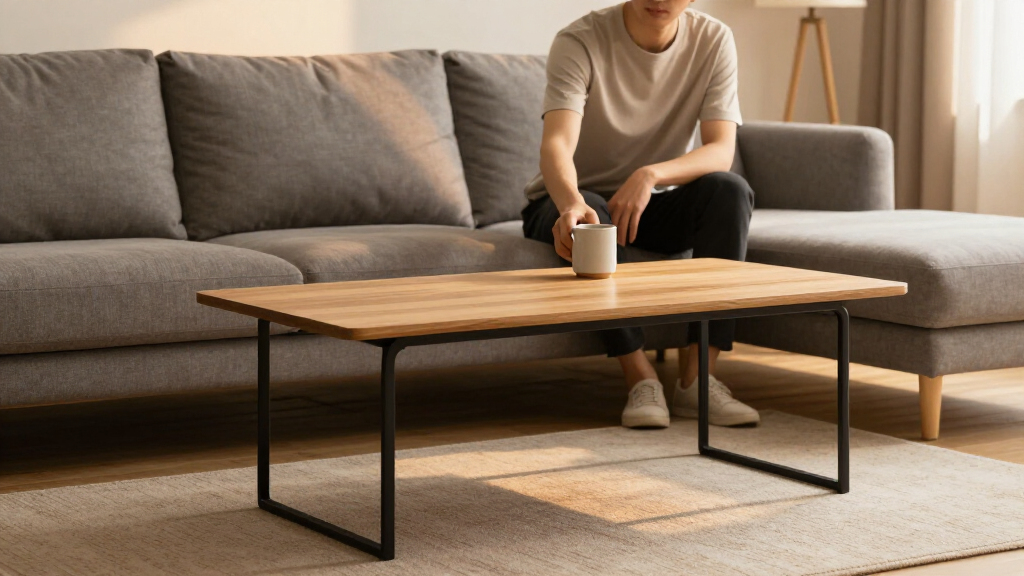
Livingetc published advice from an interior stylist on judging whether a coffee table is too small for a sofa. The stylist says a 50–70% sofa-length guideline can help, but comfort, reach and how the room is used matter more; side tables can add practical surface space without replacing a small coffee table.
Livingetc has published an interior stylist’s advice for deciding whether a coffee table is too small for a sofa, arguing that daily comfort and reach matter more than a fixed size formula. The stylist cites a common guideline of a table measuring about 50–70% of the sofa’s length, while recommending that households also consider the gap between the furniture and how they use the seating area.
The stylist’s simplest test is practical: if someone has to lean forward or get up just to set down a drink, the table may be too small or too far away. The article recommends leaving roughly 40–50 centimetres between the sofa and table, a distance intended to allow movement while keeping the surface within reach. These are design recommendations, not building standards, and room layouts vary.
Before choosing a replacement, the stylist advises considering what the table needs to hold and whether everyone seated can reach it. Hosting, everyday drinks, books, laptops and decorative objects can all affect the amount of surface area a household needs. Shape matters as well: the article suggests rounded or softened corners, including oval and rounded-rectangle designs, when a larger table is needed but a bulky footprint would make movement awkward.
A small table does not automatically need to go. The stylist says it can remain as a decorative or visual centrepiece if other pieces provide the missing function. Side tables, drinks tables and C-shaped tables can bring a surface closer to individual seats, while avoiding the need to enlarge the central table solely for convenience. The article names IKEA’s UGGLERUM side table as one example of a table that can tuck around a sofa; it does not provide product testing or comparative performance data.
Comfort Matters More Than Ratios
The advice addresses a common furnishing decision: whether an undersized-looking table is a problem of proportions or simply a mismatch with how the room is used. A surface that is too distant or too small can make ordinary activities less convenient, while choosing a much larger table may restrict movement, particularly in a compact living room.
Separating the table’s visual role from its practical role gives readers another option besides replacing it. A small central table can anchor the seating area, while movable side tables provide places for drinks and devices. The stylist’s approach is guidance based on design experience, rather than evidence that one measurement will suit every sofa or household.
round coffee table for small living room
As an affiliate, we earn on qualifying purchases.
As an affiliate, we earn on qualifying purchases.
A Common Sizing Guideline
The article notes that online advice often puts coffee-table length at around half to seven-tenths of sofa length. The stylist presents that as a starting point, not a universal rule: a percentage alone cannot account for the room’s circulation space, the sofa’s shape, the table’s form or what people need to place on it.
The stylist says that, across eight years of design consultancy, they have seen clients move house with an existing coffee table only to find its proportions no longer suit the new room. The article links that problem to furnishing decisions often being made after larger pieces, even though the table has a functional role in the finished seating arrangement.
As an affiliate, we earn on qualifying purchases.
Room Layouts Still Vary
The supplied article does not give a single measurement that determines when a coffee table is definitively too small. Its 50–70% length ratio and 40–50-centimetre spacing are presented as general guidance; the source does not specify how those figures should change for different sofa depths, room shapes or mobility needs.
It also does not report a survey, controlled comparison or product test. The recommendations reflect the stylist’s professional experience and preferences. Whether a particular table works in a specific home depends on its layout and the people using it.
As an affiliate, we earn on qualifying purchases.
Test the Setup at Home
The article recommends checking the arrangement in use: sit in each regular seat, try reaching for a drink, and see whether people can move through the gap comfortably. Then identify what is missing—surface area, reach or visual balance—before deciding whether to change the main table or add smaller pieces.
Livingetc also points readers to its free product-sourcing service, where they can submit a brief and budget for help finding furniture. The source provides no further announced milestone or follow-up report, so any decision about a specific room remains with the homeowner.
As an affiliate, we earn on qualifying purchases.
Key Questions
How long should a coffee table be compared with a sofa?
The article cites a common guideline of about 50–70% of the sofa’s length. The stylist treats that as a starting point rather than a fixed rule, since room layout and everyday use also affect the right size.
How much space should be between a sofa and coffee table?
The stylist generally recommends leaving around 40–50 centimetres between them, so people can move through the space while keeping the table within reach. The suitable gap can vary by room.
Should I replace a small coffee table?
Not necessarily. The stylist says a small table can remain as a visual centrepiece if side tables, drinks tables or C-shaped tables provide the extra surfaces people need.
How can I tell if my current table is inconvenient?
Try using it from each seat. If you regularly have to lean far forward or stand up to place a drink on it, the table may be too small, too far away or poorly positioned for the seating arrangement.
Source: rss
Fall Picks
fall essentials
As an affiliate, we earn on qualifying purchases.