TL;DR

Get decor and gifts delivered free with Prime
- Fast, free delivery on millions of items
- Prime Video, Amazon Music and more included
- Member-only deals all year
Ideal Home contributor Ammarah Hasham says she airs pillows, cushions and other soft furnishings outdoors on dry, sunny days, a habit she learned from her mother. She says the method can help reduce trapped moisture and lingering odours, but it is not a substitute for washing or care required by a product’s label.
Home decorator and Ideal Home contributor Ammarah Hasham has described a household routine she learned from her mother: placing pillows, cushions and other soft furnishings outside on a dry, sunny day to air them. Hasham says the practice can help reduce moisture and stale smells in items used every day, while advising readers to check fabric care instructions before leaving anything outdoors.
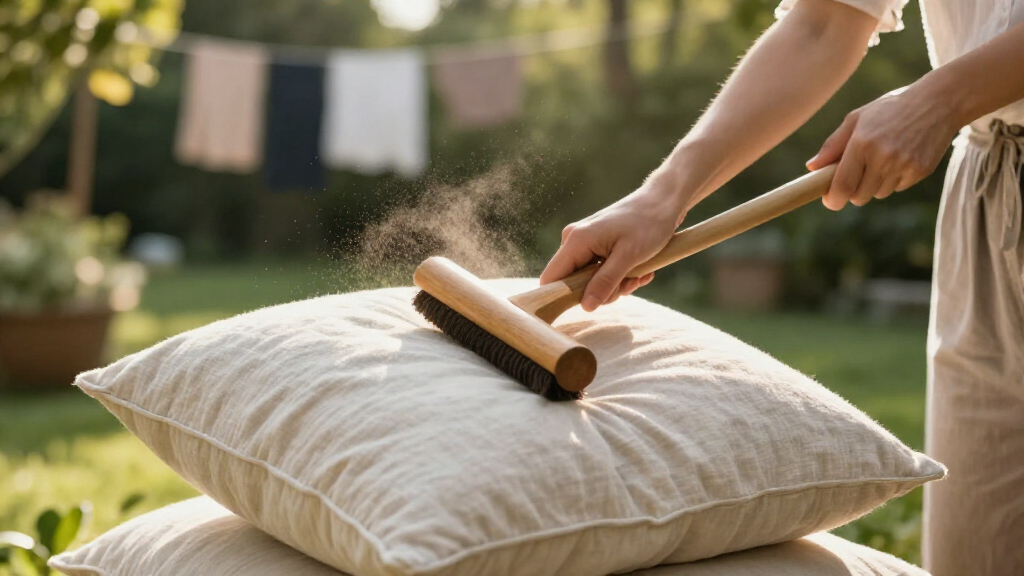
Hasham said the routine drew questions after she shared a photograph of her soft furnishings “sunbathing” in her garden. She explained that she lays cushions on a clean, dry sheet, or uses a clean garden bench or clothes airer, leaving space around each item so air can circulate. Duvet covers are easier to hang on a washing line, she wrote.
Before putting items outside, Hasham removes pet hair and dust with a lint roller, pet-hair remover or soft upholstery brush. She then checks the item’s manufacturer care instructions. On occasion, she lightly sprays a suitable fabric deodoriser from a distance, taking care not to soak the material; she describes this step as optional.
Hasham says she leaves the furnishings outside for four to five hours, subject to the manufacturer’s instructions, and turns them over halfway through so both sides can air. She shakes and fluffs the items before bringing them indoors, which she says helps redistribute the filling. The article does not present this as a measured test or establish how much odour or moisture the method removes.
A Simple Routine for Everyday Soft Furnishings
Pillows and cushions are used frequently and can take in moisture from bodies and their surroundings, Hasham wrote. Airing them is a low-effort maintenance habit that may help with stuffiness and lingering odours between washes, particularly for households that want to rely less often on cleaning products.
The advice is useful as a care routine, not a promise of sanitisation or a replacement for cleaning. The result will depend on the material, weather, exposure and condition of the item. Readers should follow product labels and avoid leaving fabrics out if rain, damp air or direct sun could damage them. Hasham’s account is a personal household practice rather than a controlled comparison of cleaning methods.
As an affiliate, we earn on qualifying purchases.
The Advice Comes From a Family Habit
Hasham presents the practice as one of several old-fashioned housekeeping habits she learned from her mother. In the article, she connects it to a broader preference for looking after everyday furnishings rather than focusing only on occasional decorative items. She also says her two cats shed fur around the home, making regular removal of hair part of her routine.
Her account links airing with other basic care steps: removing visible fur, checking fabric labels, allowing airflow and fluffing fillings afterwards. The supplied report does not identify a particular season or offer results from testing different fabrics, weather conditions or outdoor exposure times.
““The explanation is pretty simple. In fact, it is a habit I mentioned in my earlier article where I shared easy housekeeping tips I learnt from my mother.””
— Ammarah Hasham, Ideal Home contributor
fabric deodorizer spray for cushions
As an affiliate, we earn on qualifying purchases.
As an affiliate, we earn on qualifying purchases.
Results Depend on Fabric and Weather
The article does not report a controlled test or quantify how much moisture, odour or microorganisms outdoor airing removes. Hasham says sunlight has antimicrobial properties and may help reduce certain microorganisms on fabrics, but the supplied material does not specify the organisms, exposure conditions or a measured effect. That statement should not be read as evidence that airing disinfects an item.
It is also unclear how the routine performs across different fabrics, fillings or climates. Care labels may limit sun exposure or specify other cleaning methods, and damp or changeable weather could make outdoor airing unsuitable. Hasham’s four-to-five-hour practice is qualified by the manufacturer’s instructions, not offered as a universal rule.
lint roller for pet hair on soft furnishings
As an affiliate, we earn on qualifying purchases.
As an affiliate, we earn on qualifying purchases.
Check Labels Before Airing
For anyone trying the routine, the practical next step is to check the care label and choose a dry, sunny day. Use a clean surface, leave room for airflow, turn items partway through and bring them indoors if conditions change. Skip the optional deodoriser if it is not suitable for the fabric, and do not treat airing as a substitute for any washing or specialist care the manufacturer requires.
The supplied report does not announce a product, formal study or follow-up test. Hasham’s guidance remains a personal domestic tip; whether it suits a particular pillow or cushion depends on its care instructions and the conditions available.
clothes airer for cushions and pillows
As an affiliate, we earn on qualifying purchases.
As an affiliate, we earn on qualifying purchases.
Key Questions
How does Ammarah Hasham air pillows and cushions?
She places them on a clean, dry surface outdoors, leaves space around them for airflow, turns them partway through and shakes and fluffs them before bringing them inside.
How long does she leave soft furnishings outside?
Hasham says she typically leaves them out for four to five hours, subject to the manufacturer’s care instructions. That timing is her practice, not a universal recommendation.
Does airing in sunlight disinfect pillows?
The article says sunlight may help reduce certain microorganisms, but it gives no test results or measured effect. Airing should not be treated as disinfection or as a replacement for washing when required.
Should I use fabric deodoriser before putting cushions outside?
Hasham says this is optional. If using one, she recommends a product suitable for the fabric and a light spray from a distance, without saturating the material.
What should I check before airing a cushion outdoors?
Read the manufacturer’s care label first, then consider the fabric, filling and weather. Use a clean, dry surface and avoid outdoor exposure that conflicts with the care instructions.
Source: rss
Fall Picks
fall essentials
As an affiliate, we earn on qualifying purchases.