
TL;DR

Get decor and gifts delivered free with Prime
- Fast, free delivery on millions of items
- Prime Video, Amazon Music and more included
- Member-only deals all year
A Hunker report describes clear adhesive contact paper as a lower-cost alternative to curtains or static-cling film for adding privacy to windows while letting light pass through. It can be trimmed after application and comes in patterned options, but prices, durability and removal results depend on the product and window.
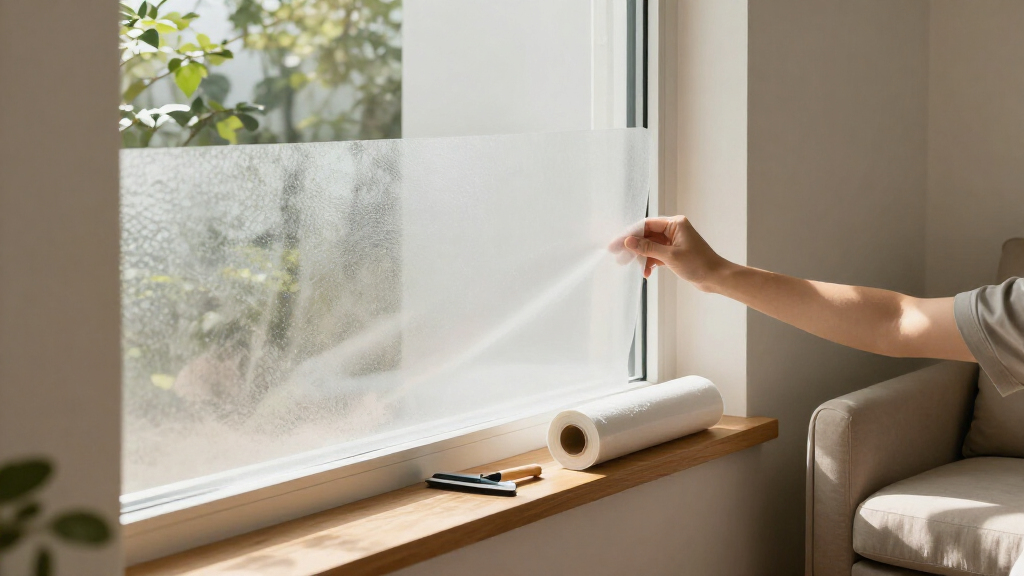
Clear contact paper can provide a budget-conscious way to add privacy to a window without hanging curtains, according to a Hunker report. The adhesive covering gives glass a frosted appearance that obscures views while allowing light through, making it a possible option for spaces such as bathrooms where curtains may feel bulky.
Hunker says contact paper is generally less expensive than static-cling window film, particularly when a larger amount is needed. Unlike static-cling material, it attaches with adhesive, which the report says can help it stay in place in humid rooms. The source does not provide prices or compare specific brands, so the cost difference will depend on the products and window area.
For installation, the report recommends cleaning the glass first and measuring the pane. The paper can be applied slightly larger than the glass, then trimmed at the edges with a utility knife. A wallpaper smoother, credit card or similar tool can help push out air bubbles as the covering is laid down. The source advises using care with sharp blades near glass.
Plain clear paper is not the only look described. Hunker lists lace and frosted patterns, colored or solid coverings, and stained-glass designs. Applying strips rather than covering the whole pane can create a striped effect. More opaque or colored designs may block more light, while the clear option is intended to balance privacy and daylight.
A Practical Option for Small Windows
The suggestion addresses a common trade-off for renters and homeowners: windows need privacy, but curtains take up space and require decisions about hardware, dimensions, style and cleaning. A covering applied directly to glass may suit small bathrooms or other compact rooms where fabric panels could add visual clutter. It also leaves the window area free of curtain rods and hanging fabric.
The approach is not identical to curtains. Contact paper changes the glass itself, so it may be less convenient for people who want to uncover the window regularly or adjust privacy throughout the day. Its value depends on the window, the desired level of light and whether a removable adhesive product is acceptable. Hunker’s cost comparison is a general claim, not a quoted price or a guarantee that contact paper will be the cheapest choice in every case.
Products Worth Considering

Philips Hue White and Color Ambiance Smart Light Starter Kit with Bridge and 4 A19 Bulbs

Ring Alarm 8-Piece Kit (2nd Gen) Home Security System

Ring Alarm 14-Piece Wireless Security System Kit
As an affiliate, we earn on qualifying purchases.
How the Adhesive Covering Works
The report presents contact paper—often used on shelves or other flat surfaces—as an alternative use for windows. Clear varieties create a frosted effect: they reduce visibility through the glass while still allowing some light to enter. Patterned or solid-color versions can provide more screening, though they may also reduce incoming light.
Hunker says the material can be removed if the user changes their mind, and that adhesive residue may come off with soap and water or a commercial adhesive remover. Removal may vary by product and surface. The supplied report does not include testing data, prices, installation time or information about how the covering performs over extended periods.
“A much more budget-friendly way to add privacy to your windows, while still letting in light, is to skip the curtains entirely and apply clear contact paper directly to the glass.”
— Hunker report
Costs and Performance Vary
The source does not identify the exact contact paper price, the amount needed for a typical window or how long the covering lasts. It also does not establish whether every clear product provides the same level of privacy, especially at night when interior lights are on. Readers should check product instructions and test visibility under the conditions in which the room will be used.
Removal is described as easy, but the report offers no product-specific testing or guarantee that adhesive will leave every kind of glass residue-free. It is also unclear how the material holds up to repeated cleaning, heat or prolonged exposure to sunlight. Those factors may vary by brand, installation and location.
Check the Product Before Applying
Anyone considering the approach can compare the cost of enough contact paper for the window with purpose-made privacy film, then review the product’s instructions for glass suitability, light transmission and removal. Measuring first and trying a small section can help reveal whether the pattern and privacy level fit the room. The next step is a careful application to clean glass, smoothing bubbles and trimming excess material only after it is in place.
Key Questions
Does clear contact paper block all views through a window?
The Hunker report says clear contact paper gives glass a frosted look that obscures what is inside while allowing light through. The source does not specify visibility levels in different lighting, so check the product and test it under day and night conditions.
Is contact paper cheaper than window film?
Hunker says contact paper is usually less expensive than static-cling window film, especially for larger areas. It provides no prices or brand-by-brand comparison, so costs may differ.
How is contact paper applied to a window?
Clean the glass, apply the paper slightly larger than the pane, smooth out bubbles with a suitable tool, and trim the excess carefully. Follow the product instructions and take care when using a utility knife near glass.
Can contact paper be removed?
The report says it is easy to remove and suggests soap and water or an adhesive remover for residue. Results may vary by product and surface, and the source does not provide a removal guarantee.
Source: hunker.com