
TL;DR

Get decor and gifts delivered free — and shop member deals
- Fast, free delivery on millions of items
- Access to Prime Big Deal Days deals on October 6–7
- Prime Video, Amazon Music and more included
Spooky Halloween candles pair seasonal scents and flickering light with designs ranging from simple votives to sculpted skulls and pumpkin jars. Choose by fragrance strength, vessel, and labeled burn time, then follow the maker’s instructions, keep flames attended, and consider an unscented or battery-operated option where fragrance or open flame is a concern.
A tiny flame can turn a plain room into a haunted house: shadows stretch across the walls, and the air smells of cinnamon, smoke, or warm vanilla. But the best Halloween candle is more than a spooky label; it suits your room, your nose, and the way you plan to use it.
This guide helps you pick a scent and style, compare candle details, avoid common burn problems, and decorate with care. You’ll also find simple ideas for gifting and storing seasonal candles after October ends.
Choose fragrance by room and preference: sweet, spicy, smoky, or unscented.
Check wax details, wick directions, and the maker’s burn-time estimate before buying.
Follow first-burn guidance to help limit tunneling, and stop at the labeled low-wax limit.
Keep flames attended and away from children, pets, drafts, and flammable décor; use battery lights in uncertain pumpkin setups.
Store candles upright in a cool, dry place away from sunlight and heat.
Pick a Halloween candle scent that fits the room
Spooky Halloween candles can smell sweet, spicy, smoky, or softly woody, so start by matching the fragrance to the room and the mood you want. Pumpkin spice and caramel can make a kitchen feel cozy, while apple and cinnamon suggest a crisp orchard. Incense, earth, and resin can give a hallway a darker, old-house character. The same scent can feel inviting in a large room and overpowering in a small one, because walls and closed doors limit how quickly fragrance disperses.
Fragrance names do not reliably tell you how strong a candle will smell. A “vanilla” candle might be barely noticeable or fill a room, depending on its formula, size, and how it is used. If you prefer a subtle scent, look for maker descriptions such as “light” or “soft,” and try a smaller candle before buying a larger jar. That limits both the cost and the chance of being left with a strong fragrance you do not enjoy. In a dining room, an unscented candle gives you the flickering light without competing with food aromas.
Think about who shares the room, too. A fragrance that feels festive to one person may bother another, so a scented candle is a better fit where everyone is comfortable with it. For example, a sweet pumpkin candle may feel right beside a bowl of candy but overwhelm a small bedroom. One smoky candle in a larger living room may create atmosphere without turning the evening into a scent cloud.
- Sweet: vanilla, caramel, or pumpkin spice.
- Fresh and spicy: apple, cinnamon, or clove.
- Dark and woody: smoky woods, incense, or resin.
- Low-fragrance: unscented wax for meals or sensitive noses.
Choose a candle design that earns its place in your décor
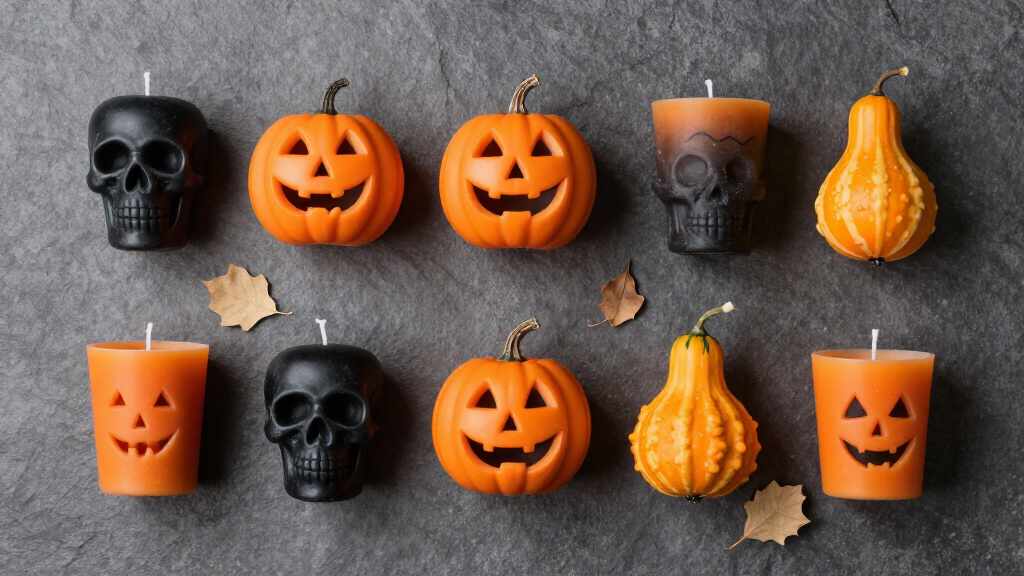
Spooky Halloween candles bring atmosphere through color, shape, labels, and candlelight, so choose a design that suits both the display and the surface where you’ll use it. They range from simple orange or black votives to jars in dark glass, sculpted skulls, ghost figures, and elaborate haunted-house designs. A simple vessel can blend into everyday décor after the holiday; a novelty shape makes a stronger seasonal statement but may be harder to reuse or store.
A black votive looks sharp beside a white pumpkin, while a small ghost candle can add a playful touch to a party table. Larger jars often work as seasonal décor before and after you light them because the container stays visible as the wax gets lower. Novelty shapes may be best left unlit if their maker does not provide clear burning instructions: an uneven shape can melt unpredictably, and a design that looks decorative does not necessarily have a safe, stable way to burn.
Consider visibility and placement as well as the product photograph. A glossy black vessel can disappear on a dark shelf, while bright orange wax stands out against pale wood. Give the candle a clear, stable spot where its shape can be seen and its flame remains away from decorations. That space may mean using fewer pieces in a display, but it makes the candle easier to enjoy and monitor.
Compare wax, wick, and burn-time details before buying
Spooky Halloween candles differ in wax, wick, vessel, and labeled burn time, and those details help you judge what you are buying and how it may fit your plans. Check the maker’s ingredient information and care instructions; paraffin, soy, beeswax, coconut, and blended waxes have different sourcing and performance characteristics. A named wax tells you something about the material, but it does not by itself predict how well the candle will burn or whether its scent will suit you.
No single wax type guarantees a cleaner or safer burn. Ventilation, fragrance, wick condition, and following the label all matter, so broad claims about wax should not replace practical care information. Burn time also varies with a candle’s size, wax, wick, and container. The maker’s estimate is useful for comparing products and planning an evening, but it is not a promise that every burn will last the same number of hours.
| Detail | What to check | Why it helps |
|---|---|---|
| Wax | Named waxes or blends | Lets you compare materials and sourcing claims |
| Wick | Care and trimming directions | Supports steady use when you follow the maker’s guidance |
| Burn time | Listed estimate and low-wax limit | Helps you plan an evening or gift |
| Vessel | Container and reuse information | Shows how it may fit your décor after use |
Say you want a candle for a two-hour Halloween dinner. A jar with a clearly listed burn time and care instructions gives you a better basis for planning than a sculpted candle with no guidance. If ingredient transparency matters to you, choose a maker that explains its materials instead of relying on broad words such as “natural.” That information helps you compare products, while the label still guides how you use the one you choose.
Burn your candle evenly with a few simple habits
To help reduce tunneling, follow the maker’s first-burn guidance and let the wax melt pool reach near the container’s edges when the instructions recommend it. Tunneling happens when wax melts around the wick but leaves a firm ring at the sides, like a narrow well forming in the candle. That ring is more than a cosmetic problem: it can leave usable wax stranded along the edges and make later burns less predictable. The right first-burn duration depends on the candle, so follow its instructions instead of extending a burn to chase a full melt pool.
- Set it up: Place the candle upright on a stable, heat-resistant surface, away from drafts and flammable objects.
- Prepare the wick: Trim it as directed on the label before lighting. A wick that is too long can affect the flame, but the maker’s guidance accounts for the candle’s design.
- Watch the first burn: Follow the maker’s timing guidance and check the melt pool; don’t burn longer than the label recommends. A draft can make the flame uneven, so choose a spot where it can burn steadily.
- Stop at the limit: Extinguish the candle when it reaches the stated low-wax level. Continuing can expose the vessel to more heat than intended.
- Let it cool: Never move a burning candle; wait until the wax and vessel have cooled. Hot wax can spill, and a warm container may be uncomfortable or unsafe to handle.
For instance, if you light a new jar while guests arrive, keep it on a clear side table and check it during the evening rather than leaving it behind a curtain or beside a paper garland. If conversation pulls you away, put the candle out before leaving the room. These habits make the flame easier to monitor and help you avoid guessing how the candle should perform.
Keep Halloween candle displays safe around people and pets
A Halloween candle display is safer when every flame stays in sight, on a stable heat-resistant surface, and clear of anything that can catch fire. Keep burning candles away from children, pets, drafts, curtains, costumes, and decorations, and leave space between candles. A crowded display can look dramatic, but nearby objects and flames are harder to monitor, so use fewer candles or spread them out if the arrangement feels cramped.
Keep every flame attended. Put candles out before you leave the room or go to sleep, and follow the product label and local fire-safety guidance.
Jack-o’-lanterns need extra care: use a stable holder and keep the flame away from the pumpkin’s sides and lid. The pumpkin can shift or dry as time passes, and the flame needs room around it, so check the arrangement rather than assuming it remains safe. For a porch lined with hay, leaves, or fabric decorations, a battery-operated light avoids the open flame altogether.
Fragrance can bother some people and animals, and the effect depends on the individual and the product. If someone in your home has fragrance sensitivities or asthma, consider an unscented candle, ventilate the room, and stop use if irritation occurs. An unscented candle still has an open flame, so it addresses fragrance rather than fire concerns. For personal medical advice, ask a health professional.
Give or store seasonal candles without losing their appeal
A Halloween candle makes a thoughtful host gift when its scent, size, and vessel suit the recipient. Small candles work well as party favors because they are easy to carry and try; a larger jar can become a seasonal centerpiece, especially when you know the person enjoys scented home fragrance. The more specific the scent or design, the more useful it is to know the recipient’s preferences before choosing.
Fragrance is personal, though, and a dramatic novelty shape may not suit every home. If you are unsure, pick a subtle scent or unscented design, check the stated burn time, and confirm the retailer’s current stock and shipping dates. A smaller candle can be a lower-commitment gift when you do not know how strong a fragrance the recipient likes. Seasonal collections often appear before October, but specific products and availability change from year to year.
When Halloween passes, store candles upright in a cool, dry place away from direct sun and heat. Upright storage helps protect the candle’s shape, while cooler conditions reduce the chance of softening; sunlight can fade colors and weaken fragrance over time. Keep the vessel in a cupboard until next October, and check its condition before lighting it again.
Frequently Asked Questions
What are the best scents for Halloween candles?
Popular choices include pumpkin spice, apple and cinnamon, clove, vanilla, and smoky woods. Pick a sweet or spicy scent for a cozy feel, or a woody, smoky blend for a darker mood. Fragrance strength varies, so check the maker’s description.
How long do Halloween candles burn?
Burn time depends on the candle’s size, wax, wick, and container. Use the estimate on the product listing and follow the label’s maximum burn guidance rather than relying on a general rule.
Which candle wax is best: soy, paraffin, beeswax, or a blend?
Each wax has its own sourcing and burn characteristics, and blends vary by maker. Compare the ingredient details and care information; the word “natural” alone does not establish safety or quality.
How can I stop a Halloween candle from tunneling?
Follow the maker’s first-burn instructions and, when directed, let the melt pool reach near the container’s edges. Don’t burn the candle longer than its label recommends, and keep the wick trimmed as instructed.
Can I burn Halloween candles around pets or in a pumpkin?
Keep flames attended and away from pets, children, flammable decorations, and drafts. For a pumpkin, use a stable holder with room between the flame and the pumpkin’s sides and lid; a battery-operated light avoids an open flame. If fragrance bothers anyone in your home, try unscented wax, ventilate, and stop use if irritation occurs.
Conclusion
Choose a Halloween candle for the room you’ll use it in, then let its label guide every burn. A steady flame, a scent you enjoy, and a clear spot away from decorations can make a dark October evening feel warm and wonderfully strange.
Fall Picks
fall essentials
As an affiliate, we earn on qualifying purchases.