
TL;DR
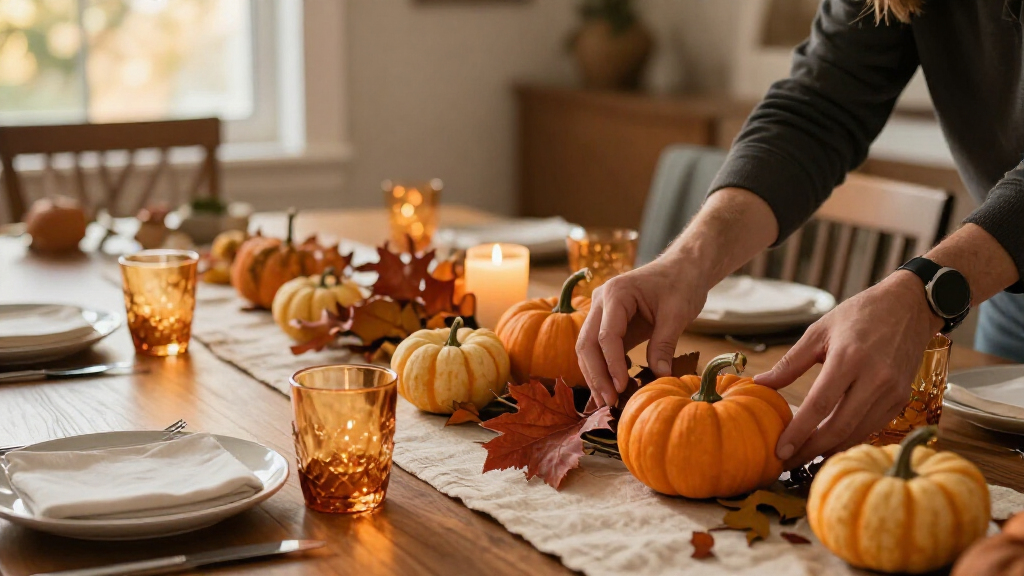
A Thanksgiving centerpiece should suit your table’s size, keep guests’ sightlines clear, and leave room for plates and serving dishes. Build around one focal element—such as a low bowl of pears, a short floral arrangement, or a row of small pumpkins—and keep candles stable and well away from anything flammable.
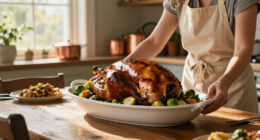
The turkey can fill the room with its rich, savory smell, but a centerpiece can still get in the way of dinner. One towering bouquet can block the person across from you; one sprawling bowl can leave no space for the gravy. The best Thanksgiving table centerpieces make the meal feel welcoming while leaving room for food and conversation.

Give the gift of listening to the book lover on your list
- Choose a 1-, 3-, 6- or 12-month membership
- They pick the audiobooks they love
- Easy to send by email
You can create that balance with fresh flowers, small pumpkins, branches, fruit, candles, or things you already own. This guide helps you choose a style for your table, keep sightlines open, build an arrangement without overspending, and handle candles and edible decorations safely. Think of the centerpiece as a guest at the table: it should add warmth, then make room when dinner arrives.
Set out plates and serving dishes before choosing a centerpiece so you can see how much room dinner needs.
Use a low arrangement for easy conversation, or keep taller branches narrow and away from guests’ sightlines.
Build around one focal element, then add only enough texture and light to make it feel finished.
Prepare dried or reusable arrangements ahead; arrange fresh flowers nearer to the meal.
Keep open flames stable and away from foliage, dried materials, napkins, and sleeves; use flameless candles for a busy table.
Choose a centerpiece that fits your table
A Thanksgiving centerpiece works best when its size matches both the table and the way you will serve the meal. A compact bowl or vase suits a small round table, while a long runner with several small groupings can work on a larger table. The goal is not simply to leave empty space: guests need enough room to set down glasses, pass dishes, and reach across without knocking decorations over.
Set out your usual place settings first, then reserve the spots where shared dishes will land. On a four-seat table, a shallow bowl of apples may be all the room allows. On a long farmhouse table, a line of small gourds, greenery, and short candleholders can feel generous while leaving deliberate gaps for stuffing or gravy. Those gaps matter because serving dishes often arrive at the center all at once, and an arrangement that looks spacious before dinner can become an obstacle once the food is on the table.
Thanksgiving centerpieces help most when they solve a practical problem as well as a decorating one. A tray or shallow platter gathers small pieces so you can lift them together when the food comes out. A runner defines the table’s center without claiming much vertical or surface space, and it can protect the wood from leaves or drips. A single large arrangement may feel simpler to compose, but separate pieces are easier to shift around the meal as serving needs change.
Check the centerpiece beside the plates and serving dishes, not in isolation. If it crowds a place setting or forces someone to reach awkwardly, shrink it or split it into smaller pieces. Open wood or linen is useful breathing room: it gives dishes a place to land and makes the remaining seasonal details feel intentional rather than packed in.
Products Worth Considering

Dyson V15 Detect Cordless Stick Vacuum

Dyson V9 Motorbar Cordless Vacuum

Samsung 65-Inch M70H Series 4K Mini LED Smart TV (2026)
As an affiliate, we earn on qualifying purchases.
Keep guests talking with a low, open design
Low centerpieces usually make it easier for guests to see one another across the table. That clear view supports conversation and lets people notice when a dish is being passed. Height can still add drama, but it changes how the table works: anything broad and tall occupies the shared view, so choose narrow branches or a slim arrangement and check from each seat that it does not block anyone’s face.
Imagine your cousin leaning around a tall bouquet to ask for the rolls. The flowers may look beautiful from the kitchen, but at dinner they create a small barrier between guests. A shallow bowl of cream-colored pumpkins, pears, and dark green leaves offers color and texture at table level, where it can be appreciated without making people work around it. This is why low arrangements often feel more welcoming even when they use fewer materials.
To test an arrangement, sit in the chairs your guests will use and look across the table. Move your head slightly from side to side: if the centerpiece repeatedly blocks a person’s face, make it lower or narrower. A short floral design in a stable vase can work nicely in the middle; taller décor may fit at the ends of a long table, where it can add height without cutting through the main sightline. The tradeoff is that end pieces may be less visible to everyone, but they preserve the open center where conversation and serving happen.
Height also affects the mood of the room. A low arrangement can make a small space feel connected, while a few slender stems draw the eye upward without filling the view. Choose based on what the table needs: visual presence is useful, but not if guests have to lean around it to feel included.
Build a warm centerpiece in five easy steps
You can make a balanced Thanksgiving centerpiece by choosing a base, adding one focal element, and checking the arrangement from a guest’s seat. This works with flowers, produce, dried botanicals, or reusable decorations because it gives the display a clear order: the base contains it, the focal piece gives the eye somewhere to land, and supporting details add seasonal texture. Keeping that order also makes it easier to stop before the arrangement becomes crowded.
- Choose a base. Set out a runner, tray, shallow bowl, or platter to define the centerpiece and contain loose pieces. A tray is easy to move as one unit; a runner takes up less room but does not gather objects.
- Pick one focal element. Use a low vase of flowers, one cluster of mini pumpkins, a wide bowl of pears, or a few sculptural branches. A single focal point keeps the display readable from across the table and prevents several competing objects from needing more space.
- Add supporting texture. Tuck in leaves, herbs, pinecones, or smaller gourds, leaving some open space between objects. The gaps keep the centerpiece from reading as a solid mass and leave room to adjust it if dishes need to fit.
- Add light carefully. Use stable candleholders with ample space around the flame, or place battery-operated candles among the decorations. Live flames add a natural glow, while flameless lights are easier to use around dry foliage and busy guests.
- Test the table. Set out plates and serving dishes, then sit down and check sightlines, reach, and room for food. This final check reveals practical problems that are hard to spot while standing above the arrangement.
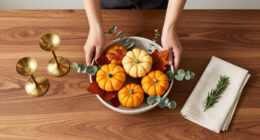
For example, use a wooden tray as the base, set three small pumpkins along it, then add a few sprigs of rosemary and two flameless candles. The pumpkins provide the visual focus, while the rosemary adds scent and the candles add light without introducing an open flame. The pieces stay easy to lift before dinner. If the table still feels crowded, remove an item instead of adding more; restraint preserves the working space that makes the arrangement comfortable to live with.
Compare fresh, dried, and reusable materials
Fresh, dried, and reusable materials each offer a different balance of scent, upkeep, and staying power. Fresh flowers and foliage bring vivid color and a just-gathered feel, but they need water and may be best arranged near the meal. Dried materials are easier to prepare ahead, though they can shed and need careful placement around flames. Reusable pieces reduce holiday setup work over time, but may need fresh foliage or a different arrangement to feel new. Choose according to when you want to prepare and how much cleanup you can take on.
| Material | Best for | What to plan for |
|---|---|---|
| Fresh flowers and foliage | Color, natural texture, and a lively seasonal feel | Use a stable vase, protect the table from water, and arrange closer to the meal. |
| Dried grasses, leaves, or branches | Advance preparation and a lasting, earthy look | They may shed, so keep them contained and well away from flames. |
| Reusable pumpkins, trays, and candleholders | A familiar seasonal display you can repeat | Store pieces carefully and refresh the look with a new runner or foliage. |
| Clean edible produce | A decoration you can move aside and serve later | Keep food separate from paint, glitter, floral wire, or other treatments. |
If you want the centerpiece finished before guests arrive, dried leaves and small reusable pumpkins can be arranged days ahead. Fresh flowers may look better if added nearer to dinner, but that timing adds a last-minute task. Decorating with apples or pears makes the display useful after dinner, provided you keep them clean and unaltered so they remain suitable to eat when moved to a serving bowl.
You can combine materials to balance those tradeoffs. A reusable wooden tray can hold fresh greenery and a bowl of fruit, giving the display structure without making every element permanent. This approach means you can reuse the parts that store well and replace only the fresh details. Fresh pieces bring a lively finish, dried pieces offer convenience, and reusable pieces simplify future holidays; the right mix depends on whether you value freshness, advance preparation, or less recurring effort most.
Make seasonal style work on a small budget
A good-looking centerpiece does not require a trip to a specialty shop. Start with what you own, then add just a few seasonal details: a cloth runner, two or three small gourds, some greenery, or a handful of candles. Limiting the number of new items helps the arrangement feel coherent and leaves more of the table available for dinner.
For a budget-friendly setup, spread a kitchen towel or scarf you already own along the table as a runner. Set a bowl of pears or apples in the middle, then add a few leaves or rosemary sprigs around it. The deep red of an apple against a cream cloth can feel warm and deliberate, especially when the surrounding place settings stay simple. Using a familiar textile also gives the display a personal feel, though a delicate scarf may need protection from spills or candle wax.
Ideas balance seasonal character with practicality when they use familiar colors and textures without demanding lots of new items. Cream, rust, dark green, muted gold, and natural wood pair easily with food and everyday dishes. A more colorful centerpiece can work, too: bright flowers stand out beautifully when the linens and plates are quiet. Repeating colors already in your dishes or room helps new pieces blend in, which means you can buy less and still make the table feel considered.
You can also make one arrangement feel complete by repeating just one or two elements. A series of three small pumpkins looks intentional when you repeat the same shade of green in nearby leaves or napkins. Keep the grouping easy to move, and it can sit on a sideboard once dinner begins. Choosing a few related elements makes the centerpiece easier to assemble and store, while editing out extras keeps the focus on the food and people around the table.
Keep candles and edible decorations safe
Centerpiece safety comes down to stable candles, clear space around flames, and food kept separate from decorative treatments. Open flames should stay well away from foliage, dried grasses, napkins, and loose sleeves. This matters especially at Thanksgiving, when guests reach across the table and serving dishes may be moved repeatedly. Battery-operated candles offer a similar glow without a live flame when there is little room to keep decorations and people apart.
Picture a narrow candleholder surrounded by dry leaves, close to a guest reaching across for potatoes. Even a small bump can shift the arrangement toward something flammable. Choose a sturdy holder on a flat surface and leave generous clear space around the flame; a low, uncluttered design makes it easier to see and avoid the candle as dishes pass. Never leave lit candles unattended, and put them out before you leave the room.
Food can make a lovely centerpiece: apples, pears, squash, nuts, or herbs bring rich color and familiar shapes. But keep edible items clean and free from paint, glitter, floral wire, or preservatives. If you decorate a pumpkin with craft materials, keep it away from produce you plan to eat. The distinction matters because decorations may leave residues or contaminants on food. Move edible pieces to a clean serving bowl when it is time to eat.
For a house with children or a crowded table, pick flameless candles and a low arrangement that does not invite reaching over a flame. You may give up the small variations of a real flame, but you gain a display that is easier to manage as people pass dishes and move around. These choices let everyone enjoy seasonal texture and warm light while keeping the centerpiece suited to the activity around it.
Frequently Asked Questions
How tall should a Thanksgiving centerpiece be?
Low arrangements usually make conversation easiest because guests can see across the table. If you prefer taller branches or flowers, keep them narrow and check the view from each seat before guests arrive.
How can I make a Thanksgiving centerpiece on a budget?
Use a runner, bowl, tray, or candleholders you already own, then add a few small gourds, clean fruit, or greenery. A simple grouping of pears and leaves can look finished without buying a full arrangement.
Can I make a Thanksgiving centerpiece without flowers?
Yes. Pumpkins, pears, squash, branches, pinecones, greenery, or candles can all create a seasonal display. For instance, a shallow bowl of small pumpkins and dark green leaves adds color and texture without needing a vase.
How do I keep a centerpiece from blocking conversation?
Choose a low design, use several small groupings instead of one large object, or place taller décor at the ends of a long table. Sit in a guest’s chair and check the sightline before setting the table.
Are candles safe in a Thanksgiving centerpiece?
Use stable candleholders and keep open flames well away from leaves, dried materials, napkins, and sleeves. Never leave lit candles unattended; flameless candles are a useful choice when the table is crowded or children are present.
Can a Thanksgiving centerpiece include food?
Yes. Clean apples, pears, squash, nuts, and herbs can decorate the table and be served later. Keep edible items separate from paint, glitter, floral wire, and other decorative treatments.
Conclusion
Choose a centerpiece that gives your table warmth and still leaves people room to eat, talk, and pass the gravy. A low bowl of fruit, a few small pumpkins, or a short line of candlelight can do the job without demanding the whole table.
Set the plates first, build around one focal piece, and remove anything that crowds the meal. When the centerpiece makes room for the people gathered around it, the holiday feels right.