TL;DR

Get decor and gifts delivered free — and shop member deals
- Fast, free delivery on millions of items
- Access to Prime Big Deal Days deals on October 6–7
- Prime Video, Amazon Music and more included
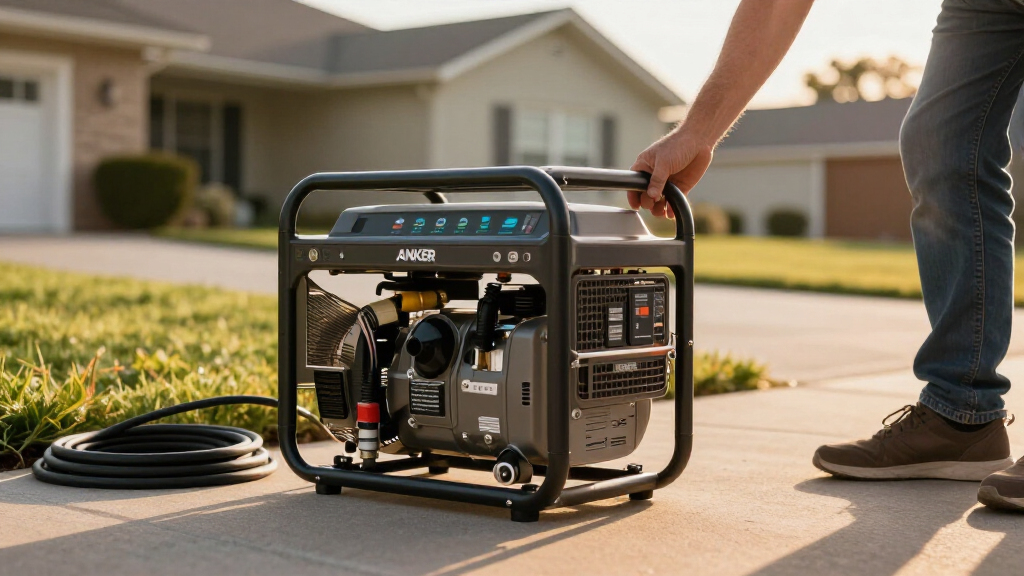
A Family Handyman reviewer tested the Anker Solix Smart Generator 5500 for just over a month, running it on gasoline and propane and connecting it to an Anker Solix E10 battery system. The reviewer reported straightforward setup and app-based starting, with DC output reaching about 4.5 kW during testing. Natural-gas operation remains untested, and the reviewer’s full home-backup system cost substantially more than the generator alone.
Family Handyman reviewer Paul Rankin reports that Anker’s Solix Smart Generator 5500 ran on gasoline and propane and connected to an Anker Solix E10 battery system during just over a month of home testing. The review found the generator easy to set up and operate, while underscoring that its role in the tested setup was to charge the batteries, which then powered the house.
Rankin tested the 224cc, four-stroke generator at his Florida home. Anker lists up to 4,500 watts of DC output on gasoline or propane and 4,000 watts on natural gas. Its conventional AC outlets provide up to 3,600 rated watts across the three fuels. Rankin said he saw DC charging output reach about 4.5 kW during testing, consistent with the advertised maximum.
Initial setup took about 20 minutes, according to the reviewer, who connected the startup battery and added engine oil. He used the physical fuel selector and electric start, and also started the unit through the Anker app. The generator includes a manual pull start. Rankin reported no starting problems, overloads, connection failures or app glitches during his month of use.
The home configuration included rooftop solar, two E10 power modules and three battery expansion modules. Rankin said the generator supplied charging power to the E10 while the batteries served household electrical loads. His longest continuous generator test lasted about two hours. The battery equipment cost about $14,000, with professional installation adding roughly $4,500, he reported; those figures describe his system, not the generator’s standalone price.
How the Generator Supports Home Backup
The review illustrates a specific use for the 5500: adding a fuel-powered charging source to a compatible battery system when solar generation is insufficient. Rankin said the generator could provide up to roughly 4.5 kW of DC charging power to the E10. In his setup, stored battery power—not a direct generator connection to every household circuit—supplied the home’s loads.
That distinction matters to buyers comparing a portable generator with a whole-home backup system. The generator can also be used on its own through its AC outlets, according to the product description, but the review’s strongest case for this model was its direct integration with Anker equipment. Building the full system involved thousands of dollars in batteries and installation in the reviewer’s case.
The reviewer also identified noise as a caveat. The source does not provide a measured decibel level, so the report supports noting noise as a concern raised by the tester, not a quantified comparison with other generators.
Testing the E10 Battery Combination
Rankin began the test with rooftop solar and an installed Anker Solix E10 whole-home battery system. During an outage, he said, solar can replenish the batteries during sunny hours, while the generator can charge them when solar is insufficient, including at night. This setup combines three sources—solar, stored battery power and a fuel-powered generator—within one home backup arrangement.
The generator supports gasoline, propane and natural gas. Rankin tested the first two but not natural gas, which would require a professionally installed connection to his home’s gas supply. His experience therefore covers two fuel types, app and manual starting, operating modes, portability, noise and battery integration; it does not establish performance on natural gas or during a prolonged outage.
The review describes the generator as a portable unit weighing about 110 pounds. Rankin found it manageable to move, though the supplied material does not give a standardized portability comparison or the conditions under which he moved it.
““The biggest surprise was how easy Anker made practically everything about using a gas-powered generator.””
— Paul Rankin, Family Handyman reviewer
Natural Gas and Long Outages Untested
The review does not establish how the generator performs on natural gas: Rankin said he had not tested that fuel because a professionally installed connection was needed. He said he planned to add one later, but the source gives no date or results from any subsequent test.
Testing also did not cover a prolonged outage. The longest continuous run reported was about two hours, and the review does not provide evidence about long-duration reliability, fuel consumption over an extended period, or the system’s performance through a storm-related outage.
The headline’s promise that the reviewer will “never lose power again” is a personal expression, not a demonstrated outcome. The source describes a test configuration and the reviewer’s experience; it does not establish that the setup can prevent all power interruptions or meet every household’s needs. The exact standalone generator price is also not included in the supplied source material.
Further Testing Planned for Gas
Rankin said he planned to add a professionally installed natural-gas connection and test that fuel in the future. No schedule or follow-up findings are provided. That testing would add evidence about the third fuel option, while the published review’s results remain limited to gasoline and propane.
For readers considering a similar setup, the report points to two practical questions: whether they already own compatible Anker equipment, and what the complete system would cost after batteries and installation. The review does not provide a general cost estimate for other homes or a comparison with alternative backup configurations.
Key Questions
Which fuels did the reviewer test?
Paul Rankin tested the generator on gasoline and propane. He said he had not tested natural gas because that required a professionally installed connection.
How much power did the generator provide?
The review reports that DC charging output reached about 4.5 kW during testing. Anker lists up to 4,500 watts of DC output on gasoline or propane, and up to 3,600 rated watts through the AC outlets.
Did the generator directly power the reviewer’s whole house?
In the tested configuration, the generator charged the E10 battery system, while the batteries supplied the home’s electrical loads. The reviewer clarified that the generator was not directly supplying every appliance.
What did the reviewer’s home backup system cost?
Rankin reported about $14,000 for the battery equipment and roughly $4,500 for professional installation. Those are costs for his particular setup; the supplied review text does not give the generator’s standalone price.
Source: rss
Fall Picks
fall essentials
As an affiliate, we earn on qualifying purchases.