
TL;DR

Get decor and gifts delivered free — and shop member deals
- Fast, free delivery on millions of items
- Access to Prime Big Deal Days deals on October 6–7
- Prime Video, Amazon Music and more included
Soy wax is often marketed as a natural, eco-friendly choice, but not all soy wax is created equal. Its sustainability, additives, and burn quality depend heavily on sourcing and manufacturing. Knowing the facts helps you choose better candles.
The Truth About Soy Wax That Candle Labels Rarely Explain
Soy wax can be a cleaner, renewable candle base. But “100% soy,” “natural,” and “eco-friendly” do not automatically mean sustainable farming, clean ingredients, or better indoor air. The real quality depends on sourcing, wax blends, fragrance chemistry, wick choice, and brand transparency.
What “soy wax” actually tells you
The phrase identifies the base material, not the whole candle. A soy candle can still include synthetic fragrance oils, stabilizers, colorants, questionable sourcing, or a wick that produces more soot than expected.
Pure soy is only one version
100% soy wax is different from soy-blend wax. Blends may improve scent throw or texture, but they can also change burn behavior and weaken natural claims.
Fragrance changes the story
Synthetic fragrance oils can contain hidden chemical components. Essential oils may be simpler, but they can burn faster or throw scent less consistently.
The wick is part of the burn
Soot, tunneling, melt pool, and scent release depend on wax quality, fragrance load, container shape, and wick sizing working together.
Sustainability lives upstream
Soy wax can align with eco-conscious values, but only when the soy is grown and processed responsibly. Large-scale cultivation can involve monoculture, pesticides, fertilizer runoff, and deforestation pressure.
Better sourcing signals
USDA Organic, Non-GMO, Fair Trade, crop rotation, reduced chemical inputs, and disclosed farm origin are stronger signals than front-label phrases alone.
Why quality affects enjoyment
Higher-quality soy often produces a smoother, more stable wax with more even melting and better fragrance release. Ethical sourcing is not only a values question; it can affect the candle on your shelf.
What the label says vs. what it proves
A good candle label should answer practical questions: what wax, what fragrance, what wick, what certifications, and where the soy came from. Anything vague deserves a closer look.
| Claim Or Feature | What It May Mean | What To Verify | Trust Level |
|---|---|---|---|
| 100% soy wax | Wax base may be soy, but fragrance and wick may still be synthetic. | Full ingredient list and wax blend disclosure. | ~ conditional |
| Eco-friendly | Could refer to renewable wax, packaging, or brand positioning. | Sourcing, farming standards, and measurable commitments. | ~ vague |
| USDA Organic | Indicates stronger agricultural standards and reduced synthetic inputs. | Certification scope and current documentation. | ✓ stronger |
| Non-GMO soy | Suggests seed choice, but not automatically low impact. | Farm practices, pesticide policy, and supplier details. | ✓ useful |
| Natural fragrance | May include essential oils, isolates, or loosely defined fragrance blends. | Phthalate-free claim, allergen disclosure, and fragrance source. | ~ needs proof |
| No ingredient detail | The brand is asking you to trust marketing language. | Ask for wax, wick, fragrance, and sourcing transparency. | ✗ weak |
A candle performs as a system
Cleaner burning is not a single-material guarantee. The final candle reflects every decision from farm to flame, and each link can improve or undermine the result.
Soy Farm
Crop rotation, non-GMO seeds, and reduced chemical inputs improve the starting point.
Wax Maker
Processing affects purity, melting point, smoothness, and consistency.
Formula
Fragrance oils, dyes, and stabilizers shape scent throw and natural appeal.
Wick Fit
Wrong wick sizing can cause tunneling, soot, overheating, or weak scent release.
Your Room
Ventilation, burn time, trimming, and container size influence the final experience.
How to choose better soy candles
The strongest buying signal is not a pretty phrase. It is a transparent trail: ingredients, sourcing, certifications, and candle design details that can be checked.
Label transparency spectrum
“Natural soy candle” without supporting details leaves too many unknowns about fragrance, additives, wax blend, and farming practices.
Best-case soy candle profile
Look for disclosed soy origin, certified sourcing, phthalate-free or clearly defined fragrance, minimal additives, and wick material details.
From label claim to real confidence
Use the front label as a starting point, then follow the evidence. A truly better candle can explain what it is made from, where it came from, and how it burns.
Frequently asked questions
Soy wax can be a good choice, but the answer is rarely automatic. These are the questions that separate marketing from meaningful quality.
Is soy wax truly eco-friendly?
It can be, especially when sustainably sourced and free from unnecessary synthetic components. Certifications and supply chain disclosure matter.
Does soy burn cleaner than paraffin?
Generally yes, because paraffin is petroleum-based. Still, wick choice, fragrance load, and candle design influence soot and indoor air quality.
Are soy candles always non-toxic?
No. A soy base does not rule out synthetic fragrances, stabilizers, dyes, or other additives. Read the ingredient list carefully.
What should I look for first?
Prioritize full ingredient disclosure, soy sourcing details, Non-GMO or USDA Organic signals, and clear fragrance and wick information.
Key Takeaways
- Not all soy wax is sustainably sourced; check for certifications like USDA Organic or Non-GMO.
- Read ingredient lists carefully—‘natural’ and ‘soy’ labels can hide synthetic fragrances or additives.
- The environmental impact of soy depends heavily on farming practices—prefer brands that prioritize sustainability.
- Soy wax generally burns cleaner with less soot, but wick choice and candle design also matter.
- Always verify transparency and supply chain details before trusting a candle’s eco claims.
As an affiliate, we earn on qualifying purchases.
What Exactly Is Soy Wax — And Does It Live Up to Its Claims?
Soy wax is a vegetable wax made from soybean oil. It’s marketed as a natural, biodegradable alternative to petroleum-based paraffin. But not all soy wax is equal. Some brands use pure, natural soy, while others blend it with additives or synthetic fragrances that weaken its ‘all-natural’ appeal.
Imagine a candle labeled ‘100% soy wax’ sitting next to one with a long list of chemical ingredients. The first might genuinely be a renewable, biodegradable product, but the second could be a soy blend or contain synthetic fragrances. The key is to look beyond the label—know what’s inside.
Understanding this distinction matters because additives or synthetic fragrances can compromise the candle’s natural qualities, affect indoor air quality, and alter how the candle burns. Choosing truly natural soy wax means prioritizing products with minimal or no added chemicals, which can sometimes mean paying a premium but ensuring a cleaner burn and better environmental profile.
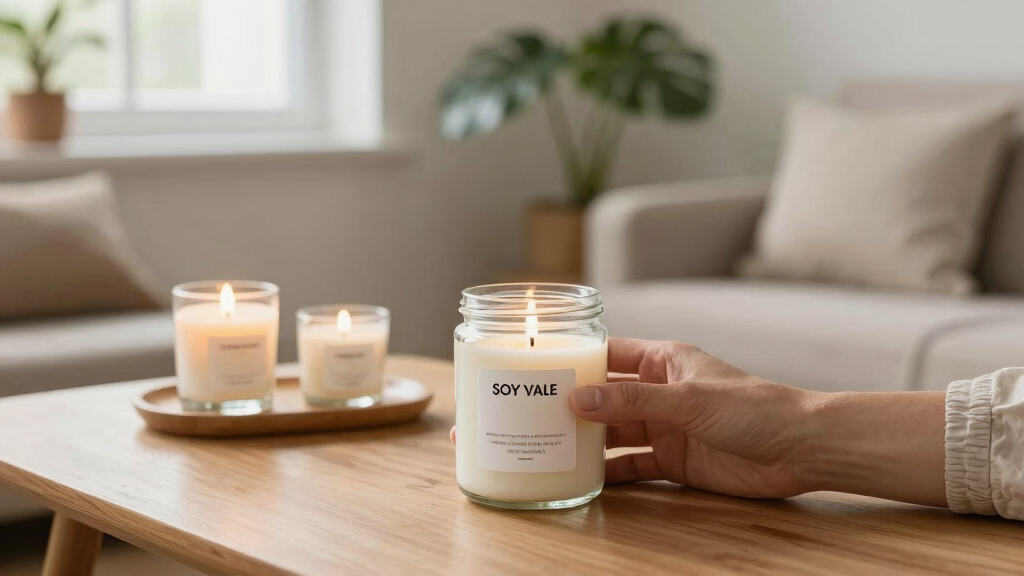
soy wax candle with natural fragrance
As an affiliate, we earn on qualifying purchases.
As an affiliate, we earn on qualifying purchases.
How Sourcing and Production Impact Soy Wax Quality
Most soy wax is derived from soybeans grown in the U.S., but the environmental footprint varies significantly depending on farming practices. Large-scale soy farming often involves deforestation, pesticide use, and monoculture, which can lead to habitat loss and pollution. Brands that prioritize sourcing soy from sustainable farms—using practices like crop rotation, non-GMO seeds, and reduced chemical inputs—tend to produce higher-quality, more environmentally friendly wax.
This isn’t just about environmental ethics; it affects the wax’s purity and performance. Soy from sustainable farms is less likely to contain residual chemicals or contaminants that could affect the candle’s burn or scent throw. Moreover, sustainably sourced soy often has a smaller carbon footprint, making your purchase more aligned with eco-conscious values. Opting for brands that disclose their sourcing practices allows consumers to make more informed, ethical choices that support better farming practices and reduce environmental harm.
Additionally, the quality of soy used influences the wax’s melting point, consistency, and ability to hold scent. Higher-quality, sustainably farmed soy tends to produce a smoother, more stable wax that burns evenly and releases fragrance more effectively. This means that choosing sustainably sourced soy isn’t just an ethical decision—it directly impacts the performance and enjoyment of your candles. Supporting transparent brands also encourages industry-wide improvements, pushing for higher standards in sustainable farming and processing.
As an affiliate, we earn on qualifying purchases.
Additives, Fragrances, and Hidden Ingredients in Soy Candles
While soy wax can be naturally derived, many candles include synthetic fragrances, stabilizers, or additives to improve scent throw, appearance, and shelf life. These ingredients can significantly impact the candle’s burn quality, safety, and natural appeal. For example, synthetic fragrance oils often contain phthalates or other chemicals that are not only artificial but can also be harmful when inhaled over time.
Choosing candles labeled ‘natural’ or ‘essential oil-scented’ doesn’t guarantee absence of additives. Some brands add stabilizers or use synthetic fragrances to enhance scent projection, which can lead to uneven burning or increased soot. These additives can also compromise the candle’s biodegradability and indoor air quality. Therefore, reading ingredient labels carefully—and understanding that ‘soy’ alone doesn’t ensure a clean, natural product—is essential. Better yet, seek out candles with transparent ingredient lists and certifications to ensure fewer synthetic components and a more authentic natural experience.
Furthermore, many so-called ‘natural’ candles may still contain trace amounts of synthetic chemicals due to processing or added fragrances. These compounds can accumulate indoors, especially in poorly ventilated spaces, potentially causing health issues over time. The tradeoff is that candles made with pure essential oils and minimal additives might burn more quickly or have less consistent scent throw, but they offer a safer, more genuine natural experience. Being vigilant about ingredient transparency empowers you to avoid hidden chemicals and choose candles that truly align with your health and environmental values.
soy wax candle with certifications
As an affiliate, we earn on qualifying purchases.
As an affiliate, we earn on qualifying purchases.
The Real Impact of Soy Farming on the Environment
Soy farming’s environmental toll is often overlooked. Large-scale cultivation in regions like South America is linked to deforestation—particularly in the Amazon rainforest—which destroys vital habitats and contributes to climate change. Additionally, intensive soy farming involves significant pesticide and fertilizer use, leading to runoff that pollutes waterways and harms ecosystems.
Choosing candles made from sustainably farmed soy can help mitigate these impacts. Look for brands that specify their soy is non-GMO, USDA Organic, or Fair Trade certified. These labels usually indicate better farming practices, such as reduced chemical use, preservation of biodiversity, and support for local farmers. Supporting such brands encourages more sustainable agriculture and reduces the environmental costs associated with soy production, making your candle choices more aligned with environmental conservation efforts.
Beyond the direct environmental impact, supporting sustainable soy farming helps promote practices that conserve water, reduce soil degradation, and protect biodiversity. When consumers prioritize these certifications, they send a market signal that sustainability matters, encouraging producers to adopt better practices. This collective shift can lead to a significant reduction in the ecological footprint of soy-based products, ultimately fostering a more sustainable and responsible industry.
Frequently Asked Questions
Is soy wax really eco-friendly and non-toxic?
It can be, especially if sourced from sustainable farms and free from synthetic fragrances. Always check for certifications to verify claims.How does soy wax compare to paraffin or beeswax?
Soy burns cleaner and longer than paraffin, which is petroleum-based. Beeswax is natural and aromatic but usually more expensive and denser. Each has pros and cons depending on your priorities.Are soy candles better for health and the environment?
Generally, yes, if they’re made from sustainably farmed soy and contain natural ingredients. But always scrutinize the label for hidden additives or synthetic fragrances.What should I look for on a candle label to ensure quality?
Look for certifications, detailed ingredient lists, and transparency about sourcing. Avoid vague terms like ‘eco-friendly’ unless backed by reputable labels.Do soy candles produce less soot?
Typically, yes, but factors like wick size and candle design also influence soot production. Proper wick selection is key.Conclusion
The next time you pick a soy candle, don’t just rely on the label. Dig a little deeper—your wallet, your home, and the planet will thank you. The truth isn’t always pretty, but it’s worth knowing.Fall Picks
fall essentials
As an affiliate, we earn on qualifying purchases.