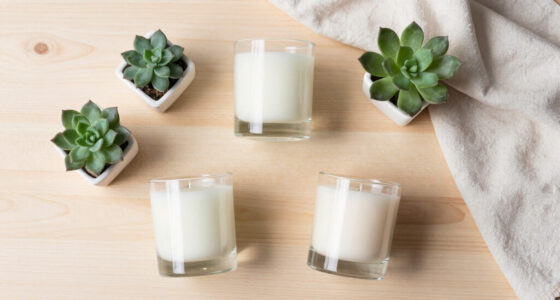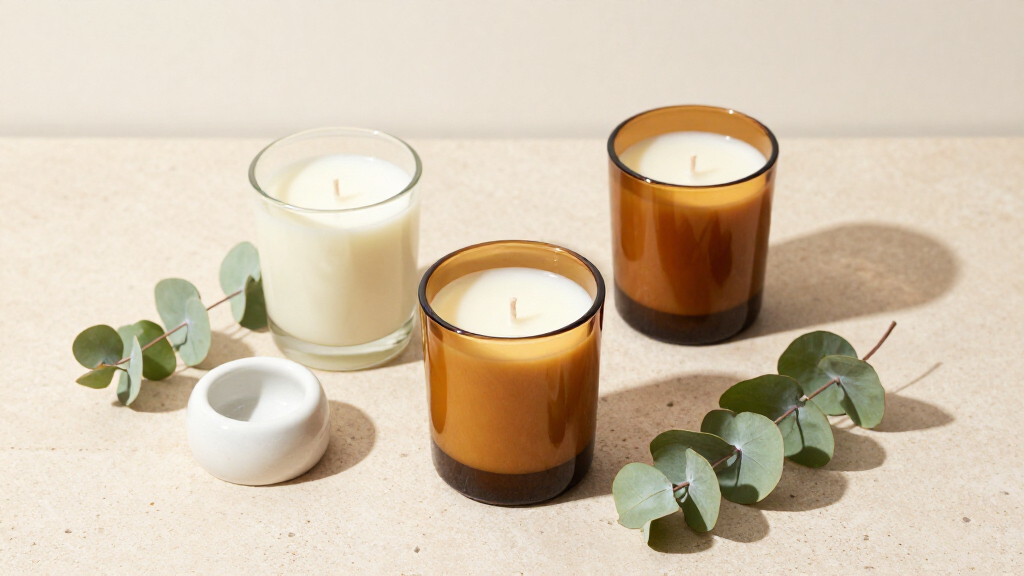

Walk down the candle aisle of any home goods store and you’ll notice the label battle almost immediately: some candles proudly announce “100% soy wax” or “natural vegetable wax,” while others quietly list paraffin or “blended wax” in the ingredients. Both are scented candles. Both come in the same jars, the same scents, and often at prices that overlap more than you’d expect. So the real question for a buyer is not which candle smells better in the abstract — it’s whether the wax itself matters enough to justify the price difference, and what you’re actually trading when you pick one over the other.

Get decor and gifts delivered free with Prime
- Fast, free delivery on millions of items
- Prime Video, Amazon Music and more included
- Member-only deals all year

Chesapeake Bay Candle Mind & Body Balance + Harmony Scented Candle, 8.8 oz
- ✔ Fragrance: Balance + Harmony (fruity, floral, sandalwood base)
- ✔ Wax: Natural soy wax blend
- ✔ Scent ingredients: Essential oils
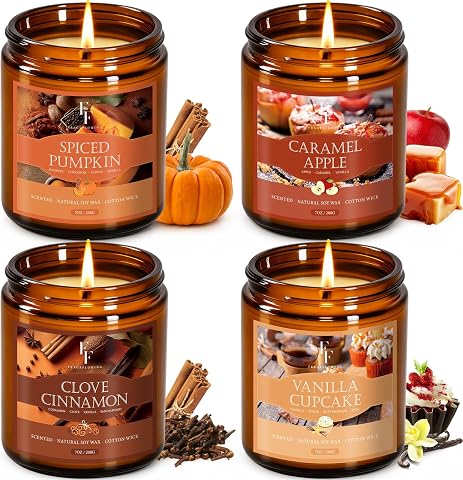
4-Pack Fall Scented Soy Wax Candles
- ✔ Quantity: 4 candles
- ✔ Wax: Soy wax
- ✔ Weight per candle: 7 oz

Auelife Fall Scented Soy Candle Set, 4 Pack
- ✔ Quantity: 4 candles
- ✔ Wax: Soy wax
- ✔ Scents: Apple Pie, Cinnamon, Harvest, Wreath
The honest answer is that wax type changes several things you can genuinely notice: how strongly the scent fills a room, how long the candle lasts, how much soot ends up on your jar and walls, and how much you pay per hour of burn time. Soy candles are made from hydrogenated soybean oil, burn cooler and slower, and are marketed as the cleaner, more sustainable choice. Paraffin candles, made from petroleum byproducts, have been the industry default for over a century because the wax is cheap, holds fragrance extremely well, and throws scent into a room with authority.
This comparison breaks down how the two waxes perform across the criteria that actually affect your experience: scent throw, burn time and value, soot and air quality, price, appearance, and environmental footprint. If you burn candles daily in a small apartment, your priorities look very different from someone who lights one occasionally for a dinner party — and by the end of this guide, you should know exactly which camp you fall into.
At a Glance
| Criteria | Scented soy candles | Scented paraffin candles | Winner |
|---|---|---|---|
| Scent throw (hot) | Good but softer; better in small-to-medium rooms | Excellent; fills large rooms easily | B |
| Scent throw (cold) | Often weaker; soy holds less fragrance oil | Strong; noticeable from the unlit candle | B |
| Burn time | 20-50% longer than paraffin at equal size | Faster burn; consumes wax more quickly | A |
| Soot and air quality | Minimal soot, cleaner burn, no petroleum byproducts | More soot, petroleum-derived emissions | A |
| Price | $20-45 for a quality 8-10 oz candle | $8-25 for a similar size, especially mass-market brands | B |
| Burn quality (tunneling, evenness) | Requires correct first burn and good wicking; can frost or tunnel if cheaply made | Very predictable, burns evenly with little fuss | B |
| Sustainability | Plant-based, renewable, biodegradable | Petroleum byproduct; not renewable | A |
| Appearance of the wax | Matte, creamy, sometimes frosted or rustic look | Smooth, glossy, translucent premium look | Depends |
Chesapeake Bay Candle Mind & Body Balance + Harmony Scented Candle, 8.8 oz
This candle earns our top spot because it is the only option in this lineup engineered as a complete everyday product rather than a seasonal novelty. The Balance + Harmony fragrance is built in layers — tropical fruits, peach, pear, and citrus at the top, florals in the middle, and a sandalwood, foliage, and rosewood base — which gives it a complexity neither multi-pack in this guide can match. Where the fall sets lean on single-note dessert scents like cinnamon or apple pie, this candle develops as it burns.The details also set it apart. An 8.8-ounce soy wax blend delivers roughly 50 hours of burn time, and the self-trimming wick removes the most common maintenance mistake candle owners make — forgetting to trim the wick, which causes soot and uneven burning. The frosted glass jar is a genuine functional upgrade over the tins and amber jars in the multi-packs: it diffuses candlelight softly, looks at home in any room regardless of season, and is recyclable through TerraCycle once empty.The tradeoff is straightforward: you get one fragrance, not four. Compared with the FF FRAGRFLOWING set, you sacrifice variety and pay more per ounce of burn time, but you gain a candle you can burn in July without it feeling out of place. It is also rated for indoor use only, so it is not the choice for a covered porch or patio.
Pros:
- Complex, layered fragrance profile from top to base notes
- Self-trimming wick reduces maintenance and soot
- Frosted glass jar is attractive in any season and recyclable through TerraCycle
- Made in the USA with a natural soy wax blend and essential oils
Cons:
- Only one fragrance — no variety across seasons
- Indoor use only
- Higher cost per burn-hour than the multi-pack options
Best for: Buyers who want one refined, complex candle for year-round everyday use
Not ideal for: Anyone who wants multiple scents to rotate, or needs an outdoor-rated candle
Bottom line: The most complete and transparent scented soy candle of the three, and the one we would put in a cart without hesitation for everyday use.
“The most complete and transparent scented soy candle of the three, and the one we would put in a cart without hesitation for everyday use.”
4-Pack Fall Scented Soy Wax Candles
If the Chesapeake Bay candle is about depth, this set is about breadth. Four 7-ounce candles — Vanilla Cupcake, Spiced Pumpkin, Cinnamon Clove, and Caramel Apple — give you up to 50 hours of burn time each, for a potential 200 hours total. That is the largest total burn time in this comparison, and it is the core of this set’s value argument: for the price of roughly one premium candle, you get four distinct moods to match everything from Halloween parties to quiet November evenings.The scents are framed around natural essential oils, and the amber jars with gift-box packaging mean the set works as a hostess gift or a seasonal décor accent straight out of the box. Compared with the Auelife set, this one is the more confident purchase: Auelife does not disclose burn time or candle size, while FF FRAGRFLOWING specifies both, which matters enormously when you are calculating whether a multi-pack is actually a deal.The obvious limitation is the seasonal framing. These are unmistakably autumn scents; by spring, a Spiced Pumpkin candle can feel misplaced on the shelf. The vanilla option is the most season-flexible of the four, but the set as a whole is not a year-round solution the way the Chesapeake Bay pick is. It also lacks the self-trimming wick and recyclable glass container of our top pick, so expect slightly more hands-on maintenance.
Pros:
- Up to 50 hours of burn time per candle — 200 hours total
- Four distinct autumn-inspired scents in one set
- Soy wax with natural essential oils
- Gift-ready boxed packaging with seasonal amber jars
Cons:
- Scent selection is firmly seasonal, not year-round
- No self-trimming wick or premium container features
- Vanilla and caramel dessert scents can read sweet for some noses
Best for: Value-focused buyers who burn candles heavily in fall and want scent variety
Not ideal for: Anyone shopping for a single everyday candle that works across all seasons
Bottom line: The best burn-time-per-dollar option here, provided your candle habit peaks between September and December.
“The best burn-time-per-dollar option here, provided your candle habit peaks between September and December.”
Auelife Fall Scented Soy Candle Set, 4 Pack
This set sits in third place not because it is a bad product, but because it is the least documented of the three — and in a buying guide, missing information is a real cost. Auelife does not specify burn time or candle size, so unlike the FF FRAGRFLOWING set, you cannot calculate hours per dollar or judge whether each candle suits a small bathroom or a large living room before it arrives.What it does offer is a slightly different seasonal palette. Instead of leaning entirely on dessert scents, the fragrances — Apple Pie, Cinnamon, Harvest, and Wreath — include more botanical, atmospheric options like Harvest and Wreath. If the FF FRAGRFLOWING set feels too sugary to you, this lineup’s greener, woodier notes may be the better match for a living room or entryway.Its clearest strength is presentation: this is the set we would choose when the candle is the gift, not the purchase. The packaging is designed for gifting, and a four-scent fall set is an easy, low-risk present for a housewarming or holiday host. Just go in with managed expectations — compared with our top pick’s self-trimming wick, recyclable jar, and stated 50-hour burn, this set asks you to trust the brand on the fundamentals. For a gift, that is usually acceptable; for your own everyday candle, it is a harder sell.
Pros:
- Four seasonal fragrances including woodier Harvest and Wreath options
- Made with soy wax
- Attractive gifting presentation
- Less dessert-heavy scent mix than comparable fall sets
Cons:
- Burn time is not specified
- Candle size and weight are not specified
- Seasonal scents limit usefulness outside autumn
Best for: Gift shoppers who want a polished, presentable fall candle set
Not ideal for: Buyers who need documented burn time and candle dimensions before purchasing
Bottom line: A solid giftable fall set with a more botanical scent mix, held back by vague specifications.
“A solid giftable fall set with a more botanical scent mix, held back by vague specifications.”
As an Amazon Associate we earn from qualifying purchases.
Key Differences
The single biggest practical difference is scent throw, and paraffin wins it clearly. Paraffin wax holds more fragrance oil and melts at a higher temperature, which releases scent into the air more aggressively. A well-made paraffin candle can perfume an open-plan living room; a soy candle of the same size and fragrance load will usually do a comfortable job in a bedroom or bathroom and may go unnoticed in a large space. If your primary goal is “make the whole house smell like this candle,” paraffin — or a soy-paraffin blend — is the more reliable choice. This is why many mainstream fragrance brands, even premium ones, still use paraffin or paraffin blends: it simply performs the job customers notice first.
The second major difference cuts the other way: burn cleanliness and longevity. Soy wax burns cooler and slower, so an 8-ounce soy candle can outlast an equivalent paraffin candle by 20 to 50 percent, and it produces visibly less soot — the black residue that accumulates on jar rims and, over years of regular burning, on walls and ceilings. Soy also burns without the trace petroleum-derived compounds that paraffin releases. For people who burn candles several times a week in a small living space, especially around children, pets, or anyone sensitive to smoke, this difference compounds and becomes the deciding factor rather than a nice-to-have.
Finally, there is price, where the tradeoff becomes concrete. Paraffin wax is cheap to produce, so mass-market paraffin candles cost roughly $8-15 while comparable soy candles typically run $20-40 from boutique makers. But price per candle understates value: soy’s longer burn time narrows the per-hour cost gap considerably. A $30 soy candle that burns 50 hours costs 60 cents per hour; a $12 paraffin candle that burns 30 hours costs 40 cents. The gap is real but smaller than the sticker prices suggest — and buyers should also know that cheap “soy blend” candles often contain mostly paraffin, so the label alone doesn’t guarantee the clean burn they’re paying for.
Detailed Comparison
Scent throw (hot and cold) (Scented paraffin candles wins — major)
Paraffin wins this criterion, and the gap is major. Paraffin’s molecular structure accepts a higher fragrance load and its hotter melt pool vaporizes scent oils more efficiently, so a lit paraffin candle projects fragrance across a room with real force. Soy wax, being denser and cooler-burning, tends to produce a softer, more ambient scent — pleasant up close, sometimes underwhelming at distance. Cold throw (the scent from an unlit candle) follows the same pattern: paraffin candles often smell strongly straight out of the box, while soy candles can seem faint until lit. In practice, this means soy works well for bedrooms, bathrooms, and offices, while paraffin is the better tool for large or open living areas where you want guests to notice the fragrance. Note that a heavily fragranced premium soy candle from a good maker can close much of this gap — but at equal fragrance load, paraffin throws harder.
Burn time and longevity (Scented soy candles wins — moderate)
Soy wins, and for frequent burners the difference is meaningful. Soy wax melts at a lower temperature, so the candle consumes wax more slowly — typically 20 to 50 percent longer burn time for the same volume. An 8-ounce soy candle commonly delivers 40-55 hours; an equivalent paraffin candle lands closer to 25-40 hours. If you burn a candle every evening, that difference adds up to weeks of extra use per candle over a year. The practical consequence: soy’s higher upfront price buys you more hours, which partially offsets its cost disadvantage. Buyers who light candles only occasionally will notice this less, since both types last a long time at low usage.
Soot, air quality, and cleanliness (Scented soy candles wins — major)
Soy wins clearly, and this is the criterion most responsible for soy’s popularity. A properly wicked soy candle produces minimal soot and no petroleum-derived combustion byproducts, while paraffin candles — particularly cheap ones with poor wicks — emit visible black soot that coats jar rims and, with heavy regular use, walls and furnishings. Paraffin also releases small amounts of petroleum-related compounds as it burns. For most healthy households this isn’t a health crisis, but for people with asthma, allergies, pets, or small children, or anyone burning candles daily in a small apartment, the cleaner burn is the single most practical reason to choose soy. Keep expectations realistic: any candle, soy included, produces some soot if the wick is too long or the candle is cheaply made, so wick quality matters as much as wax type.
Price and value per hour (Scented paraffin candles wins — moderate)
Paraffin wins on sticker price, and the gap is real: mass-market paraffin candles run $8-15, while quality soy candles typically cost $20-40 from smaller makers. But the per-hour picture is closer than the shelf prices suggest, because soy burns longer. Roughly, expect paraffin around 30-45 cents per burn hour and soy around 50-70 cents, depending on brand. Soy also carries a boutique markup in many cases — you’re often paying for hand-poured production, nicer vessels, and fragrance quality, not just the wax. The honest read: paraffin is the better raw value, soy costs a modest premium for its cleaner burn and longer life, and whether that premium is worth it depends on how often you burn candles and how sensitive your household is to soot.
Burn quality and ease of care (Scented paraffin candles wins — minor)
Paraffin wins slightly on predictability. Paraffin has been the industry standard for a century, so manufacturers have wicking and burn behavior dialed in — it melts evenly, rarely frosts, and behaves consistently across brands. Soy has quirks: it can tunnel if the first burn doesn’t reach the jar’s edge, it often develops “frost” (white crystallization) on the surface, and cheaply made soy candles can have wicks that drown or mushroom. None of these flaws ruin the candle, but they demand slightly more care — trimming the wick, committing to a 2-3 hour first burn, and buying from makers who know their wicking. In practice this is a minor annoyance for attentive users and a genuine frustration for people who want to light a candle and forget about it.
Sustainability and ingredients (Scented soy candles wins — moderate)
Soy wins, though with caveats worth knowing. Soy wax is plant-based, renewable, and biodegradable, while paraffin is a petroleum byproduct — a non-renewable resource whose extraction and refining carry environmental costs. That said, industrial soy farming is not impact-free, and some soy wax is produced from crops grown where forests were cleared, so “eco-friendly” is a relative claim rather than an absolute one. Buyers who prioritize ingredient transparency also tend to prefer soy candles from small makers, who more often use cotton or wood wicks, phthalate-free fragrance oils, and recyclable vessels. If sustainability influences your purchases, soy is the defensible choice; just don’t treat the label as a guarantee without checking the maker’s practices.
Appearance of the finished candle (minor difference)
This one is genuinely a tie, because it depends on the look you want. Paraffin takes dye and glossy finishes beautifully, producing smooth, translucent, high-shine candles that look polished in a retail display. Soy has a soft, creamy, matte appearance that reads as natural and handmade — which is exactly the aesthetic many buyers now want. Soy’s tendency to frost or develop a rough surface after burning bothers some people and delights others who see it as evidence of natural wax. Neither wax is objectively better looking; match the wax to the style of the room and your own taste.
Scented soy candles: Pros and Cons
Pros:
- Burns 20-50% longer than paraffin at equal size
- Minimal soot and no petroleum byproducts — better for daily burners and sensitive households
- Plant-based, renewable, and biodegradable
- Lower melt point means a safer, cooler flame
- Usually made by small producers with cleaner fragrance oils and better wicks
Cons:
- Weaker scent throw, especially in large or open rooms
- Higher upfront price ($20-45 for a quality candle)
- Can tunnel, frost, or burn unevenly if cheaply made or mishandled
- Requires more care: wick trimming and a proper first burn
- “Soy blend” labels can hide a mostly-paraffin candle
Scented paraffin candles: Pros and Cons
Pros:
- Strongest scent throw of any common wax — fills large rooms easily
- Cheaper upfront, with huge brand variety at every price point
- Predictable, even burning with little maintenance
- Smooth glossy finish and strong cold throw for gifting
- Decades of manufacturing refinement means consistent quality from major brands
Cons:
- Produces more soot; black residue on jars and, over time, walls
- Burns faster, eroding the price advantage per hour
- Petroleum-derived, non-renewable
- Releases petroleum-related compounds when burned
- Mass-market options often use lower-quality fragrance oils
Who Should Choose What
Choose Scented soy candles if:
- You burn candles several times a week in a small or medium room like a bedroom, bathroom, or office
- You share your home with children, pets, or anyone with asthma or smoke sensitivity
- You dislike soot on jars, walls, and ceilings and want the cleanest possible burn
- You value long burn time and don’t mind paying a premium per candle
- You prefer supporting small makers and want plant-based, transparent ingredients
Choose Scented paraffin candles if:
- Your top priority is a powerful scent that fills a large or open-plan space
- You burn candles occasionally and want maximum fragrance per dollar
- You want a low-maintenance candle that burns evenly without attention
- You’re buying candles as gifts where strong cold throw and glossy looks matter
- You love mainstream retail scents, which are mostly paraffin-based
Skip both if: You need fragrance in a very large space without an open flame concern, or you’re extremely sensitive to any combustion byproducts — in that case, consider alternatives like reed diffusers, wax warmers, or electric diffusers, which deliver scent with no soot at all.
Value for Money
On raw value, paraffin wins: it delivers stronger fragrance for less money, and its faster burn only partially erodes that advantage on a per-hour basis. For the occasional burner — someone who lights a candle a few times a month for ambiance — the paraffin price advantage is genuine and the soot downside is negligible at that usage level. Paying double for soy in that scenario is hard to justify on performance alone.
For frequent burners, the calculus flips. If you burn candles nightly, soy’s longer burn time narrows the per-hour cost gap to roughly 10-25 cents, and the reduced soot stops being cosmetic and starts protecting your walls, furniture, and air quality. At that usage, the soy premium buys something you’d otherwise pay for in cleaning and ventilation. The one trap to avoid: cheap “soy blend” candles that cost nearly as much as pure soy while containing mostly paraffin — you pay the premium and get none of the benefit. Check the label for “100% soy wax” or buy from makers who state their wax plainly.
The fairest summary: paraffin is the better value for occasional, scent-first use; soy is the better value for daily use where longevity and cleanliness compound in your favor.
Final Verdict
If you’re a frequent candle user in a small-to-medium space — and especially if you have kids, pets, or anyone sensitive to soot — choose soy. The longer burn time, cleaner air, and renewable ingredients make the higher price genuinely worth it, and the softer scent throw is a non-issue in rooms under about 200 square feet. Buy from a reputable maker, trim the wick, and give the first burn a full two to three hours to prevent tunneling.
If you burn candles occasionally and your main goal is a bold fragrance that announces itself the moment guests walk in, choose paraffin — or a soy-paraffin blend from a quality brand, which splits the difference nicely. You’ll pay less, get a stronger throw, and the soot produced by occasional use is trivial.
The single biggest deciding factor is how often you burn and how big your space is. Daily burner in a cozy room: soy, without hesitation. Occasional burner chasing maximum scent: paraffin, and don’t feel guilty about it. The worst outcome is paying the boutique soy price for a blended candle that delivers paraffin’s drawbacks — so whatever you choose, read the wax label before you buy.
Frequently Asked Questions
Do soy candles really burn longer than paraffin candles?
Yes, typically by 20 to 50 percent for the same volume of wax. Soy has a lower melting point, so it forms a melt pool at a cooler temperature and consumes wax more slowly. An 8-ounce soy candle commonly reaches 40-55 hours of burn time, while a similar paraffin candle lands around 25-40 hours. Actual results depend heavily on wick size, fragrance load, and how carefully you burn — wicks left too long shorten the life of either wax.
Is paraffin wax toxic when burned?
Burned properly, paraffin candles are considered safe for most people by regulatory standards, but they do emit more soot and trace petroleum-derived compounds than soy. Occasional use in a ventilated room poses little concern for healthy adults. The case for avoiding paraffin is strongest for daily burners, small unventilated spaces, or households with asthma sufferers, children, or pets, where cumulative exposure and soot buildup become the real issues.
Why does my soy candle have almost no scent?
Usually one of three reasons: the room is too large for soy’s softer throw, the fragrance load is low (common in cheap candles), or the candle hasn’t been burned long enough to form a full melt pool — soy needs about two hours to reach the jar’s edge before it releases fragrance properly. If you want a stronger scent from soy, buy from makers known for high fragrance loads and match the candle size to the room.
What does ‘soy blend’ mean on a candle label?
It means the wax is a mixture, often soy combined with paraffin, and the proportions are rarely disclosed. Many “soy blend” candles are predominantly paraffin, so you get paraffin’s faster burn and soot while paying close to pure-soy prices. If you’re buying soy specifically for the clean burn, look for candles labeled “100% soy wax” and avoid blends unless the maker states the composition.
Which wax is better for gifting?
Paraffin has the edge for gifts: strong cold throw means the candle smells appealing straight out of the box, and its smooth, glossy finish photographs and presents better. Soy’s matte, sometimes frosted appearance reads as artisanal, which suits some recipients perfectly, but its weaker cold throw can underwhelm at the moment of unwrapping. If gifting to someone eco-conscious, soy is the safer choice; for maximum first impression, paraffin usually wins.