
TL;DR

Get decor and gifts delivered free with Prime
- Fast, free delivery on millions of items
- Prime Video, Amazon Music and more included
- Member-only deals all year
Veranda published advice from eight interior designers on buying art, including researching prices and artists, setting a budget and checking a work’s provenance. Their guidance favors personal taste and careful sourcing over treating a collection as a competition for the most expensive or sought-after pieces.
Veranda has published a guide to shopping for art featuring advice from eight interior designers, who recommend researching artists and prices, planning around a room and budget, and buying work that reflects personal taste. The guidance matters to readers weighing original art, prints and other options for their homes, particularly when deciding how much to spend and where to buy.
New York designer and shop owner Katie Leede suggests looking at sites such as Artnet to learn what is available and get a sense of market values before buying. She also recommends talking with galleries or an art consultant, contacting artists directly and checking upcoming auctions. Leede says a buyer may be able to make an offer through an auction house after a work fails to meet its minimum bid.
Designer Hattie Sparks Collins advises starting with the space: determine the layout and whether a single large piece, a diptych or several works would suit it. Buyers should then set a budget and decide whether to look for a reproduction print or invest in an original. Collins also suggests choosing a subject and medium before considering how the artwork relates to the room’s colors.
Other designers stress personal preference and the value of reliable sourcing. Joy Moyler says buyers should choose art they want to see every day, while Stewart Manger recommends consultants for purchases where provenance needs checking. The article also points to dealers, artist studios, galleries, auction houses and online platforms as possible sources, depending on the work and the buyer’s budget.
A Practical Path From Taste to Purchase
Buying art can involve more than finding an image that looks right on a wall. The guide gives readers a sequence for making the decision: assess the room, set a spending limit, identify preferred subjects or media, then compare available works and sellers. That can help buyers avoid treating a purchase as a decorating afterthought or assuming that only high-priced originals belong in a considered collection.
The advice also separates aesthetic choice from financial and authentication questions. A person choosing a print for decoration may shop differently from someone considering a higher-cost work whose history and attribution matter. Consultants, auction specialists and established dealers can offer information, but the article does not claim that any one route guarantees an investment return or eliminates risk.
Products Worth Considering

Ring Alarm Pro 14-Piece Home Security Kit with Built-In eero Wi-Fi 6 Router

Levoit Vital 200S-P Smart Air Purifier for Large Rooms up to 1875 ft²

Levoit EverestAir-P Smart Air Purifier for Large Rooms
As an affiliate, we earn on qualifying purchases.
Designers’ Advice Across Buying Routes
The Veranda report draws on comments from designers working in several cities and describes a range of approaches rather than a single buying formula. Leede points to research and auctions; New York- and London-based designer Christina Nielsen emphasizes building relationships with dealers and seeking out emerging artists. Nielsen says developing a dependable list of sources took time, and that art buying is a personal decision as well as an investment in a home.
For people who want help evaluating a work, Manger says art consultants can check provenance with artist foundations. He also describes auction-house specialists as resources across periods, styles and media. For less expensive decorative works, he names virtual auctions and platforms including Artnet and eBay. These are the designers’ recommendations, not independent assessments of the sellers or services mentioned.
““Remember that if a piece at an auction doesn’t meet its minimum bid, you can still make an offer on it through the auction house the following day.””
— Katie Leede, New York designer and shop owner, as quoted by Veranda
Costs and Authentication Still Vary
The source material does not provide price ranges, buyer outcomes or market data showing whether particular approaches lead to better value. It also does not establish that every artist foundation can verify every work or that provenance checks guarantee authenticity. The advice is based on designers’ experience and recommendations, not a formal comparison of art-buying methods.
Availability, fees, condition and return policies may differ by seller and by work. The article does not specify how readers should evaluate those terms, nor does it identify a universal standard for deciding whether a work is a sound financial investment. Buyers considering a costly purchase may need to seek advice specific to that work and seller.
Next Steps Before You Buy
The guide does not announce a formal follow-up or a new industry development. For readers applying its advice, the next step is to measure the space, choose a budget and shortlist subjects, formats and sellers. They can compare works through galleries, dealers, artists, auction houses or online listings, then ask questions about condition, price and documentation before committing.
For a higher-value purchase, readers can ask an art consultant or auction specialist about provenance and request supporting records from the seller. For a decorative purchase, the designers’ guidance points toward balancing cost, framing and personal appeal. The final choice remains with the buyer; the report offers no guarantee that a selected work will rise in value or suit a home indefinitely.
Key Questions
How should a first-time buyer start shopping for art?
Start by assessing the wall or room, choosing a budget and narrowing down preferred subjects or formats. Veranda’s designers also recommend researching artists and available works before making a purchase.
Does art need to match a room’s color scheme?
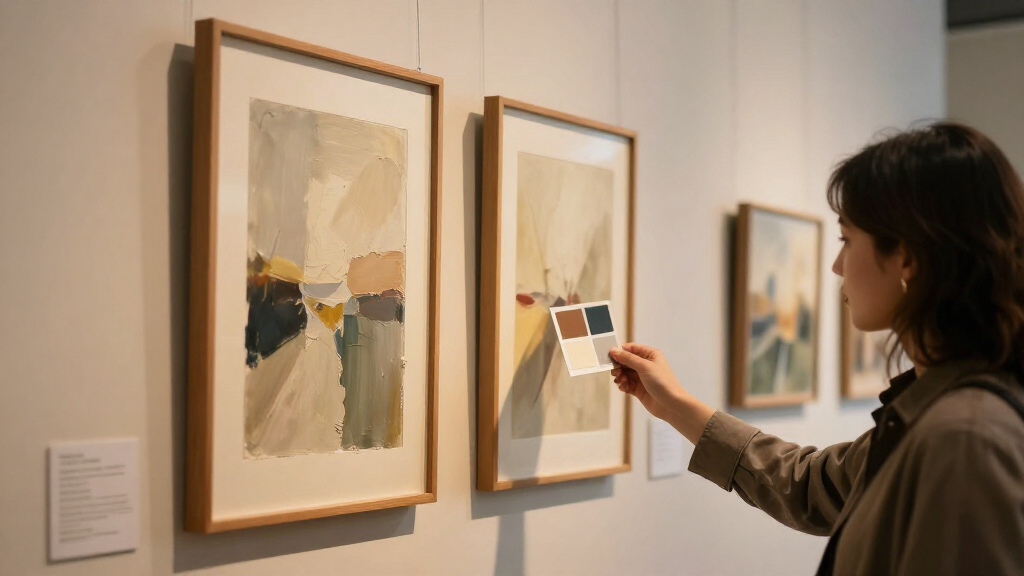
No. Designer Hattie Sparks Collins says art does not have to match a room, but should complement it. Joy Moyler suggests letting colors in the artwork guide choices such as the frame or mat.
Where can buyers look for art?
The designers name galleries, local dealers, artists, auction houses and online platforms such as Artnet. The right source may depend on the work, budget and whether the buyer wants an original or a decorative print.
How can a buyer check a work’s provenance?
Stewart Manger recommends working with an art consultant, who may check with an artist foundation to confirm that a work belongs to the artist’s body of work. The article does not say this process is available or conclusive for every piece.
Should art be treated as an investment?
The designers describe buying art as personal and, in some cases, an investment in a home. The report provides no financial performance data or guarantee of resale value, so buyers should distinguish personal enjoyment from expectations of financial return.
Source: veranda.com