
TL;DR
Interior designer Aniela Thorman says herringbone flooring has become the “Live, Laugh, Love” of interiors, arguing that mass-market vinyl versions and trend-led use have weakened its appeal. Livingetc’s report presents both criticism and support for the pattern; it does not establish that herringbone floors are broadly out of style.
Interior designer Aniela Thorman has described herringbone flooring as the “Live, Laugh, Love” of the 2020s, arguing that mass-market versions and routine use have made the pattern feel predictable. A Livingetc report examines her criticism alongside support for herringbone, but the material does not show that the flooring style has broadly fallen out of favor.

Give the gift of listening to the book lover on your list
- Choose a 1-, 3-, 6- or 12-month membership
- They pick the audiobooks they love
- Easy to send by email
Thorman, of Foundry Interiors, said a surge in luxury vinyl tile (LVT) has helped turn herringbone into a mass-market choice. In her view, manufacturers use the recognizable layout to make less expensive materials appear more high-end. Her criticism is directed not only at the pattern, but at how it is being reproduced and applied.
She also argues that the layout often works better in period homes than in modern builds. Herringbone has a long history in European interiors, and Thorman says its association with grand architecture can make it feel out of place in newer, boxier homes—particularly when combined with grey synthetic finishes and neutral palettes.
For contemporary spaces, Thorman says straight-plank timber can be a better fit, in part because its linear lines may make a room feel longer or more open. Livingetc also presents the case for herringbone, noting that supporters value the pattern’s movement and rhythm. The supplied report excerpt does not identify those supporters or give their full arguments.
Why Flooring Choices Signal More
The disagreement is about more than a particular floor pattern. Thorman’s comments point to a broader tension in home design: a feature can lose its appeal when it is reproduced widely as a ready-made marker of taste, even if the original material and setting differ. For homeowners, the practical question is whether a floor suits the architecture and materials of their own space, rather than whether a style is currently popular online.
Her argument also distinguishes between herringbone as a layout and the products commonly sold in that layout. A traditional wood floor and a synthetic imitation can share a pattern without creating the same effect. That distinction matters to anyone comparing flooring options, but the report offers no market data or survey evidence showing how widely consumers or designers now reject herringbone.
Products Worth Considering

Shark PowerDetect Robot Vacuum and Mop Combo with 60-Day Self-Emptying Base (AV2800ZE)

Blueair Blue Pure 211i Max Smart Air Purifier for Large Rooms

Roborock Q7 M5+ Robot Vacuum and Mop with Self-Emptying Dock
As an affiliate, we earn on qualifying purchases.
From Heritage Floors to Mass Market
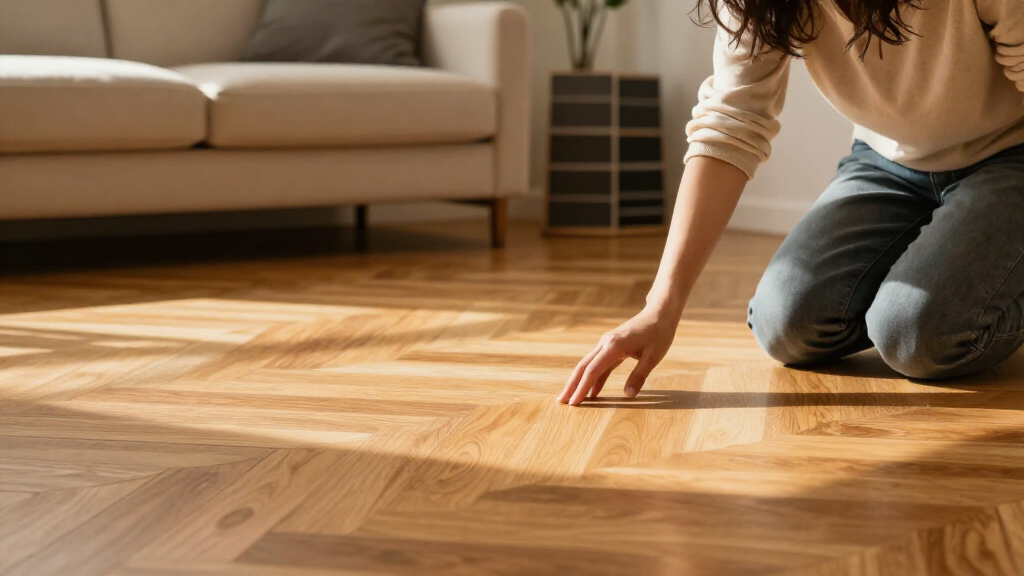
Herringbone is a zigzag arrangement of rectangular flooring pieces. The Livingetc report traces the pattern’s roots to the 16th century, describing how French aristocracy and nobility adapted an arrangement inspired by Roman stonework into wooden floors. It became associated with luxury and elegance in Europe.
The report contrasts that heritage with the pattern’s recent visibility in modern homes and affordable LVT flooring. Thorman says the shift in materials and setting has changed how people read the design. Her point is not that herringbone has no history or can never suit a contemporary home; it is that repeating it without regard to a building’s proportions and character can make a room feel generic.
“I called it that because of the massive influx of LVT (luxury vinyl tile) flooring. Because herringbone has become so accessible, mass-market manufacturers lean on it as a shortcut to make cheap materials look ‘high-end.’”
— Aniela Thorman, interior designer
How Broad Is the Backlash?
The report records one designer’s strong opinion and sets it against a defense of herringbone, but the supplied material does not include sales figures, polling, or a broader survey of designers. It is therefore unclear whether the pattern is losing popularity overall, or whether Thorman is objecting mainly to specific applications and imitations.
The provided source excerpt ends as Livingetc begins its section on supporters of herringbone. Their identities and full comments are not included, so the counterargument cannot be described in detail here. No formal trend forecast or industry consensus is established by the available material.
Choose the Pattern for the Home
The immediate takeaway from the report is a design judgment, not a confirmed industry shift: homeowners can weigh a floor’s material, finish, room proportions, and architectural details before choosing a pattern. Thorman recommends considering whether straight planks better suit a modern space, while the report’s framing leaves room for herringbone where it complements a home.
Whether the style is becoming less popular remains unanswered. A clearer picture would require broader evidence, such as market data or views from more designers. Until then, the claim that herringbone is “out” should be understood as Thorman’s critique, not a settled verdict on interior design trends.
Key Questions
Who called herringbone flooring the “Live, Laugh, Love” of interiors?
Aniela Thorman, an interior designer associated with Foundry Interiors, used the comparison in a post discussed by Livingetc.
Why does Thorman criticize herringbone floors?
She argues that mass-market LVT versions have made the pattern a routine way to make cheaper flooring look high-end, and that it can feel mismatched in modern homes without period architectural details.
Does the report prove herringbone flooring is out of style?
No. The available material presents Thorman’s opinion and notes that some designers still support the pattern. It provides no market data or survey showing a general decline in popularity.
What flooring does Thorman suggest for some modern spaces?
She says longer, straight-plank timber may suit modern rooms better because its lines can visually elongate walls and expand a space.
Source: livingetc.com