
TL;DR
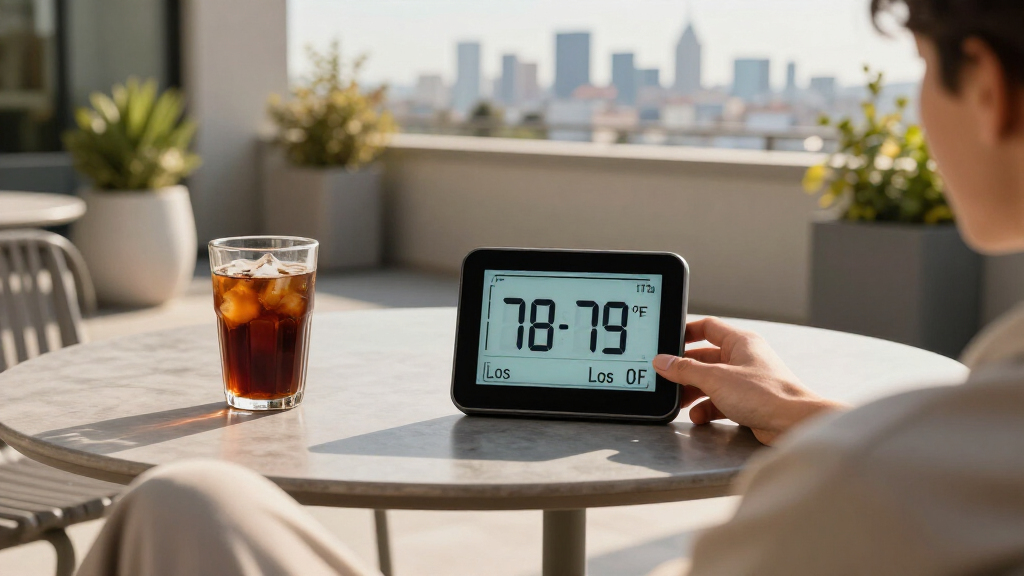
A market activity on Kalshi indicates traders are betting on LA reaching a high of 78-79°F on August 2, 2026. No official weather forecast confirms this yet, making the prediction uncertain.
Recent activity in a predictive market indicates that traders are betting on the high temperature in Los Angeles reaching 78-79°F on August 2, 2026. However, no official weather forecast or scientific projection has confirmed this specific temperature for that date. This speculation highlights the growing role of markets in forecasting long-term weather trends, though such predictions remain uncertain and unofficial.

Get decor and gifts delivered free with Prime
- Fast, free delivery on millions of items
- Prime Video, Amazon Music and more included
- Member-only deals all year
The Kalshi market has seen 12 recent trades related to the temperature forecast for Los Angeles on August 2, 2026. These trades suggest that some traders believe the high could be within the 78-79°F range, a relatively mild temperature for LA during summer. However, no official meteorological agency or climate model currently provides a forecast for that specific day so far in advance.
Experts caution that market-based predictions are speculative and should not be taken as definitive forecasts. Weather patterns are influenced by complex factors, and long-term predictions beyond a few weeks are inherently uncertain. The activity in the Kalshi market reflects trader sentiment and betting behavior, not scientifically validated forecasts.
As of now, the date remains nearly three years away, and climate models typically do not produce precise temperature predictions this far in advance. The market activity may be driven by traders speculating on climate trends or attempting to hedge against future weather risks, but it does not replace official forecasts from meteorological agencies.
Implications of Market-Based Weather Predictions
This development underscores the increasing use of financial markets to gauge future weather conditions, especially for planning and risk management. While such markets can reflect collective sentiment, they are not substitutes for scientific forecasts. The speculation around LA’s temperature on August 2, 2026, highlights both the potential and limitations of market-driven predictions in climate forecasting.
For residents, businesses, and policymakers, understanding the distinction between market speculation and scientific prediction is crucial. Relying on unconfirmed forecasts could lead to misinformed decisions, especially given the current uncertainty about climate patterns and long-term weather trends.
Products Worth Considering

Ring Battery Doorbell Plus (2nd Gen) and Chime Plus Bundle, Nickel Silver and White

Bose Lifestyle Ultra Speaker

Roborock Q10 S5+ Robot Vacuum and Mop with 10,000 Pa Suction
As an affiliate, we earn on qualifying purchases.
Long-Term Weather Forecasting and Market Activity
Forecasting weather several years in advance is inherently uncertain, with climate models typically providing projections over decades rather than specific daily temperatures. The recent activity in the Kalshi market reflects an emerging trend where traders speculate on future weather conditions, often based on climate change signals and historical data trends.
Historically, official forecasts from agencies like the National Weather Service or the Climate Prediction Center do not extend beyond a few months with high confidence. The current market activity is more indicative of collective sentiment than precise scientific prediction, especially for a specific date like August 2, 2026.
Such market-based predictions have gained attention for their potential to inform risk management but should be interpreted with caution, given their speculative nature and lack of scientific validation.
“Long-term weather predictions are highly uncertain, especially beyond a few years. Market activity can reflect public sentiment but should not be mistaken for scientific forecasts.”
— Dr. Emily Carter, Climate Scientist
Unconfirmed Nature of Long-Range Weather Predictions
It is not yet clear whether the market activity will accurately predict the temperature in Los Angeles on August 2, 2026. No scientific models or meteorological agencies have issued forecasts for that specific date so far, and weather predictions this far in advance are inherently uncertain. The current market activity should be viewed as speculative rather than definitive.
Monitoring Scientific Forecasts and Market Trends
In the coming months, official weather agencies may release seasonal outlooks that provide broader climate trends but not specific daily temperatures for 2026. Market activity related to long-term weather predictions will likely continue to fluctuate, but it remains a speculative indicator rather than a reliable forecast. Experts recommend following official forecasts for planning purposes and viewing market bets as a reflection of sentiment rather than certainty.
Key Questions
Can the market predict the weather accurately years in advance?
No, market activity reflects trader sentiment and betting behavior, not scientific forecasts. Long-term weather prediction remains highly uncertain, especially beyond a few months.
Is there any official forecast for LA’s weather on August 2, 2026?
No, as of now, no official meteorological agency has issued a forecast for that specific date so far in advance.
Why is the market betting on a specific temperature range for 2026?
Market bets can be driven by climate change signals, historical data, or speculative interest, but they do not constitute scientific predictions.
Should residents plan around this market activity?
No, official weather forecasts should be used for planning, as market activity is speculative and not a reliable predictor of future weather.
Source: kalshi